Homage to a Van

Years ago, Dion and I purchased a wheelchair accessible van with the financial help of many people. At the time Dion was in a mobility scooter and could ride into the van, transfer into the front seat, and drive using hand controls. Even after a wheelchair became necessary for Dion and he stopped driving, it remained an important form of independence for him. Our family can get around together, including to places beyond the boundaries of Wheel Trans (the accessible arm of public transit in Toronto). Since Dion’s move into Long Term Care it has helped us maximize time together. The van has also been an important part of my work at The Dale. It has served as an office, a storage unit, and a community outreach vehicle. 

Not even two weeks ago the van died. The end came as a surprise. I took it in to have the brakes looked at, only to be told there were much bigger problems that couldn’t be fixed. We got a second opinion which matched the first.

When I told folks at The Dale, I wasn’t sure what the response might be. I get that having a vehicle is a privilege, one that most of our community does not have. People expressed such concern and said they would pray for our family. Once again, I felt cared for and seen. I was also reminded that the vehicle has meant a lot to many people, including those who like Dion, use mobility devices. It has carried people to picnics and restaurants and funerals and waiting rooms and court. Once we had to transport someone’s beloved deceased pet to a clinic. We have rolled down the windows and blared music while travelling on the highway. There are a lot of memories. 

During last Thursday’s Breakfast-to-Go, someone expressed to me their true concern for Dion in all this. They went on to recount some of their favourite experiences of the van. Shortly after, my co-workers Joanna, Meagan and Olivia reported on two exchanges they had with people about the van. One person expressed their true sadness about its demise and how it really deserves a proper burial. Another mentioned how helpful it has been to see it parked in the neighbourhood because it signals that I am around. I wanted to both grin and have a little cry. Who knew a beat-up burgundy Toyota could have such an impact? I’m grateful that we have been able to share it in such a way that people came to count it their own. 

The van got towed away to a scrap yard last week. And so, with very little fanfare, it is now gone. We’re not really sure what is next. There are pros and cons to every solution we are considering, including not having a vehicle. I’m glad that the van, while we had it, was used to its full potential. I hope that whatever comes next will serve our family and extended community just as well. 

The windshield of the van was often decorated with gifts, in this case paper cutouts, by community members of The Dale.

Accessibility as Hospitality

It was an accessible restaurant for a couple of years. Dion and I would occasionally go, entering through a door that was both wide and street-level. One day we arrived to notice that the door was locked. I went around to the other side of building to discover that they had reconfigured the space. Now the only entrance was up three large steps. “But look!” the manager said, “The door is at least automatic”. I asked if there was any way they could let us in the other door. The answer was a hard no. “We can help him walk up the steps!” To which I said, “my husband cannot transfer out of his wheelchair. There is no walking up the steps. Do you realize that you have made a once accessible place into the opposite?” I felt enraged on Dion’s behalf. 

This is but one of many stories that could be told about the general lack of accessibility in our society. My own awareness of it was heightened when my mother became quadriplegic, with some very limited use of her right hand. Between that, Dion’s journey with Multiple Sclerosis, and the many people in my community at The Dale who require mobility supports of various kinds, my learning has expanded. This does not mean that I completely understand how it feels to experience accessibility limitations- I would never dare to claim that I do. It does mean that my eyes are open, and I feel the challenge to make accessibility a priority. It is, in my opinion, a matter of hospitality. 

My greatest teachers in this are the ones who have to navigate obstacles every single day. I have learned that the swing of a door matters, as does the placement of an automatic door button; that one step is too many; that sometimes the only way a person can manage to drink out of a cup is with a straw; that support animals are life-changing; that the height of sinks and toilets and counters can be prohibitive to some people; that not being able to participate in events because you can’t get in is heartbreaking. 

Buildings of all kinds have not been designed to be inclusive. I’m also very aware of the cost that is involved in making a space accessible. We had to build a ramp for my mom. And then when Dion required a new level of care, we had to renovate our home. We could not have made that happen without the financial support of our community. Our connections afforded us a certain privilege. I reflect on this a lot. What I long for is our experience to be replicated for everyone. 

I imagine that an important way forward is to have anything new designed for all. I recently read about how the remote control was invented for people with limited mobility, and now is a convenience for all. Similarly, SMS text messaging was first created for people who are deaf and is now a preferred method of communication. It is so easy to take those two things for granted but imagine what they mean for someone who lacks mobility or can’t talk on the phone. Accessibility for all concerns and impacts every aspect of life. 

As I walked out of that restaurant I mentioned, I was followed by one of its employees. With tears in her eyes, she explained we weren’t the first to mention the issue of the entrance and that she would be sure to talk to the manager. Seeing someone not be able to get in humanized the issue for that person. It was no longer just a door, but an obstacle. I hope that for her, and for her manager the experience will bring about tangible change.

I often think about the Biblical story of the paralyzed person who was lowered from the roof by his friends in order to see Jesus. I desire to be that kind of friend. It also reminds me that our bodies are not static. What we need today might be different tomorrow. For me, it has started with asking: for people to get around freely and in autonomy, how can we all contribute to and conceive a world that’s accessible to them and ultimately to all? 

Four Topics that Challenged Me in 2023

I can hardly believe that we are about to end a year and launch a new one. As I reflect on 2023, four topics stood out as ones that consistently challenged me.

THE MESSY MIDDLE 

In this increasingly polarized world, there are very few spaces where people can dialogue across difference. This can quickly lead to the de-humanization of the ‘other’. Though it can be uncomfortable, I want to spend time in the messy middle. I want to co-create opportunities for us to learn from one another, to understand what informs our choices, and to develop empathy for the challenges and trauma experienced by others. I believe this helps to remind me/us of our common humanity. I also hope that this can lead to increased advocacy and support for the people and places that desperately need it.

CHANGE IS HARD AND GOOD

I have been reminded in 2023 that change, even the best kind, is hard. For example, after years of doing The Dale’s Monday lunch as a meal-to-go, we got a space to move back indoors and re-launch our drop-in. For some members of the community this was a return to something they knew well, except in a very different location; for others it was a first, knowing The Dale only through the pandemic; for the staff team it was both exhilarating and exhausting, a dramatic shift from our well-established routine of the last 3.5 years. What became clear very quickly was that we couldn’t just replicate what was in the past, not because we changed our values or vision, but because this was a new time and a new place. Change for us required being gentle with ourselves, and the community. We are still settling in, each week feeling better and better. Change, though hard, is also very good. 

NO ONE CAN DO EVERYTHING

This is a lesson I have been learning my whole life. There were days in my teens and early twenties when I tried to do too much because I thought it was required, not just to be “successful”, but to be loved. I have learned along the way (through struggle, crisis, therapy and my faith) that I am beloved not because of what I do, but simply because of who I am: a child of God. It’s not always easy, especially when there are so many things to do and battles to fight. The Dale team will attest to the fact that I talk a lot about choosing what we can do, and then working really hard to do it well. One of the greatest gifts has also been discovering the gift of partnership and community: when we rely on and support the gifts of one another, so much more happens.

SABBATH IS A GIFT 

To some the notion of Sabbath (in order words, intentional rest) feels either like a punishment to self or to others. If I stop, then I won’t get through my to-do list. Or, if I stop it will potentially come at a cost to the person who relies on me. Or, if I stop [fill in the blank]. Stopping can be scary- at least it has been for me. After years of practicing Sabbath, I have discovered that all of the things that made me worry about it have not been the issue. Stopping actually enables me to get through the to-do lists. Developing a plan for the people who rely on me has meant we both learn to rely on a broader community, and we both learn of our capabilities. So, what is the issue? It goes back to that basic fear that I have to earn love by doing. Sabbath reminds me that I am no one’s saviour and that life carries on without me, both humbling and freeing truths. 

On the cusp of a new year, I am challenged by these words of Henri Nouwen, “Did I offer peace today? Did I bring a smile to someone’s face? Did I say words of healing? Did I let go of my anger and resentment? Did I forgive? Did I love?’ These are the real questions. I must trust that the little bit of love that I sow now will be many fruits, here in this world and the life to come.” As I consider these questions, I also hope for more opportunity to sit in the messy middle with people who want to do the same (let’s get another Story Day happening friends!), to navigate change with gentleness and persistence, to work hard at the things I can do and remember that we can do more together than on our own, and to rest. May we all be strengthened with hope for peace this coming year. 

Beatrice

My mother-in-law Beatrice died this morning. She hadn’t been well for much of this year, but we also didn’t expect her death this weekend. I know that Dion and his two sisters Joy and June feel relief that she is out of pain, while being very sad about her parting. No matter how familiar death has become to me, it always initially takes my breath away. It’s hard to believe that Beatrice is gone. 

I remember first meeting Beatrice. I was nervous. Dion and I were dating and while he’d met nearly all of my family, I had not met much of his as they were mostly in Newfoundland. I wondered how she would feel about this “mainlander” girl from Toronto. Dion and I arrived at his childhood home and waited for his mom, who needed to leave work and come home for lunch. She immediately greeted me with a hug, admitting that she was likely as nervous as me. We shared our first cup of tea that day- Tetley, with canned carnation milk- just the way she liked it. 

I learned very quickly that Beatrice was meticulous in the way she kept her home. She had different tea towels for different dishes (“Erinn, you have to use a cup towel for that my love”). Twice a year she would empty out every kitchen cupboard and carefully wash each item. She would even clean the underside of her kitchen table by crawling underneath it. We would tease her about all of this, to which she would laugh and promise that she was never going to change. 

In the 25+ years that I knew Beatrice, I always got a birthday card (early) in the mail, signed “with love and prayers”. She would send us a big box of things every Christmas in the mail too, which included, among other things, jars of homemade jam and her baked goods (she knew each of our favourites). When Cate came along, the mail only increased. Beatrice loved being Nanny to her granddaughter and often lamented that we didn’t live closer.

Faith was a fundamental part of Beatrice’s life, a life that was accompanied by a lot of challenge and loss. I know that Dion’s illness broke her heart. She faced all of it by clinging to Jesus. I remember the way that she and my mom connected about this. They knew hardship, and they knew what it was like to have God draw close. Beatrice loved to sing at church, regularly telling me how the music would lift her up. Just yesterday Dion, Cate, Joy and her husband Max (they are actually visiting us and helping Dion to feel not so far away) and I sang her Great is Thy Faithfulness via a video call, a song that was her testimony.

After my mom died, Beatrice told me that while she knew there was no replacing Elaine, I would have a mother in her. It is a sad thing for me that she is now gone too. I also feel so much for Dion and his sisters, knowing what it is like to lose a parent, and for the rest of Beatrice’s family including her own sisters. As I’m always reminded, grief is not a linear journey. It can force us to examine the complexity of our relationship with the one who is now gone, accompanies us even when we don’t want it to, and though it changes, doesn’t go away. What a relief though that hope can permeate it all. 

Beatrice, I will miss you. Thank you for bringing Dion into the world. Thank you for welcoming me into your family and even making me an honourary Newfoundlander. Thank you for the countless meals. Thank you for your thoughtful gift-giving, which included many things that you made by hand. Thank you for the walks along the river in Springdale and through the ravine in Toronto. Thank you for your faith. Thank you for our shared laughter. Thank you for loving Cate deeply. And thank you for loving me. I look forward to one day sharing another cup of tea.

Gratitude During Bleak Times

The weight of the world is heavy. I say this as I sit in a comfortable chair in my warm home in a country that is not at war, keenly aware of my privilege. I can rest tonight. That will not be true for everyone, including people I know who today will [try] to sleep outside. Despite my personal circumstances, I can feel overwhelmed and helpless. I long to participate in the work of justice, and try, to the best of my ability to support those doing the same. I weep with those who weep.

A long-time friend and core community member of The Dale has been regularly reminding me of the need to speak our gratitude and share our testimonies of hope in the midst of the darkness and bleak times. For her, it does not cancel out the truth of what is difficult. To me, it is a subversive act in a community such as ours, one that is well acquainted with poverty and all too often victimized by established systems.

With this in mind, I have been reflecting on a number of things that have happened at The Dale in recent months. Like:

One day every time a member of the staff team said, “you know who we haven’t seen in a long time?”, we would see that person. It lasted all day and into the evening long.

We have an email thread going with nearly every person involved in the support of a community member- I’m talking social workers, family doctor, home and community care support workers, and The Dale. In what is a very challenging situation, actually being able to coordinate and communicate in this way is helpful. It’s not perfect, but it makes a difference.

It’s been a transition for the community to go from having a meal-to-go on Mondays, to having a drop-in where we can eat around tables again. Even the best change can be challenging to settle into, but it’s happening! People are getting involved, which is exactly what our core principle of inviting people into full participation is about. Some set up or take down tables, others re-fill the coffee, more and more are spending time throughout the morning chatting and building relationship. There is real effort toward protecting the peace of the space together.

One evening a group of us wandered around the neighbourhood on what we call outreach. Twice we found ourselves gathered in a circle to pray. Both times we imagined that it looked like something we had orchestrated or maybe even forced. Neither time was that the case. Instead, we were invited to gather, to listen, to share tears, to pray and notably, to be prayed for.

I find that when I stretch the gratitude muscle it helps me catch my breath. It also fans my desire to keep up the work of seeking justice and peace-making, because I want for everyone to have a list of things that are good in their lives. As my friend often says, “I am so grateful, and I want that for everyone too”.

Starting With A Smile: The Slow and Steady Work of Friendship

If you feel lonely, you are not alone. In recent years, loneliness has been described as an epidemic. While the isolation experienced during the pandemic has decreased, the lack of social connection continues. For some, loneliness is a life-long struggle. What makes this such a debilitating struggle is that we are not meant to be solitary, we are built for community. The God of love has created us for love, which is nurtured when we are together. Moving from loneliness to connection can seem an overwhelming task. Where do we start? For me, it can start with something as simple as a smile. It started that way with Shannon. 

I noticed her panhandling outside the Dollarama. The sunlight was making her head of auburn curls gleam. Most people ignored her ask for money, walking by quickly with their heads down. I didn’t have anything to give, but we had a brief exchange where we looked one another in the eye and smiled. It was maybe a few weeks later that I learned she was an artist, who especially loved to paint. At the time, The Dale (the community organization and church where I work) was doing a weekly art workshop and so I invited her to come. 

With time, Shannon and I became very good friends. In fact, she eventually went on to adopt me as “mom”, though in reality she was my elder and our age difference made us more like siblings. We shared a lot over the years. I accompanied her to important appointments, after which we would always get burgers. We sat in countless waiting rooms together, visited the Art Gallery of Ontario, went on walks, and shared meals at The Dale’s drop-in. When my daughter and I went on a trip to Italy, Shannon was insistent I give her a picture of our experience, one that she framed and put on her apartment wall. I held her hand as she lay in the Intensive Care Unit, and she held mine after my mother died.

Shannon lived with many challenges. Over the years she willingly shared about her time living outside and all that went along with that. Shannon always made me feel safe to share about my own challenges. As someone who understood loss, she helped me make sense of my own. We also had our own shared struggles. Sometimes she would ask me to do something that I simply could not. We had many hard conversations. I do know that the depth of our relationship was possible, in part, to a strong commitment to boundaries. 

Henri Nouwen once said, “When we honestly ask ourselves which person in our lives mean the most to us, we often find that it is those who, instead of giving advice, solutions, or cures, have chosen rather to share our pain and touch our wounds with a warm and tender hand. The friend who can be silent with us in a moment of despair or confusion, who can stay with us in an hour of grief and bereavement, who can tolerate not knowing, not curing, not healing and face with us the reality of our powerlessness, that is a friend who cares.” Shannon offered me that kind of friendship. Despite all of our individual struggles and quirks, we realized we were still worthy of connection, of love, of belonging.

Relationship with Shannon began with a smile. We might never have greeted one another if not for our connection to the neighbourhood: she routinely sitting outside the Dollarama, me walking by with frequency. It didn’t require that we be at a party or a work function, instead it was both of us doing ordinary things in our place. We started to expect that we would see one another. We slowly learned about shared likes and dislikes. We discovered we both loved to say hello with a hug. Friendship arrived with a simmer, not a boil. 

There were times in our friendship that Shannon and I saw less of one another. Open about her addictions, Shannon would sometimes relapse and disappear, or I would have to attend to crisis elsewhere and find myself overwhelmed and distant. We had to learn how to have grace for each other and, as I mentioned earlier, develop healthy boundaries. For us this was about learning that we could not be everything for the other. While it might seem counterintuitive, this actually deepened our bond. 

Shannon and I also had fun. She liked to laugh at me, or “with” me as she would claim. We would eat junk food on the stoop of one of her apartments. We hung out in the park that she slept in for a time. She almost always had a gift for me, oftentimes artwork she’d created. While there was a lot of opportunity for us to send time together at structured events, these unstructured times were some of the most precious. Friendship is nurtured when people waste time together. 

It would be easy for me to leave this story here. I want to. Except, that would leave out an exceptional part: Shannon died suddenly a few years ago. The news came as a great shock, especially because she had repeatedly overcome adversity and survived near-death experiences on so many occasions. For some, this adds to the confusion about friendship. Why, if relationship involves loss, would we pursue it? The grief I carry for Shannon serves as a constant reminder of how much she meant to me and makes me understand love more. I can know joy because I know sorrow.

The loss of Shannon doesn’t make me fear friendship, it makes me long for more. I don’t know how to navigate this life that is both beautiful and hard without friendship and connection. Fashioned after a communal God, we are designed for community. And so, even though it’s challenging, I try to notice people in my place: in the line at the grocery store, in the coffee shop, on the bench in the park, or even outside the Dollarama. I notice, and then I smile. 

Post Script: Shannon gave me permission during her life to share her and our story. Also, this piece was written for See Hear Love, a show that seeks to create a safe space of belonging for women. I recently had the opportunity to be a guest on two episodes, one of which was about Belonging and Making Friends.

Story Day: Hospitality, Holding Space and Hope for More

It was close to the beginning of this year when conversations about having a gathering similar to last fall’s Story Night started. For those who don’t know, Story Night was developed in response to feedback from people who had previously been involved in Street Level, a network of poverty front-line workers. It became clear that people wanted to gather, and how it was important to broaden the scope of who might attend- there are so many people who are working toward justice, just not as their paid vocation. It felt right that Story Night was about naming our collective grief and in doing so, being reminded that we are not alone. It now felt like time for something that might encourage and equip us to keep going. I couldn’t shake the idea that hospitality might be the theme. 

Story Day: Hospitality took place last Wednesday. On the evening before, I kept thinking about how surreal it felt that the day was finally here. Now it feels surreal that it is over. It has been months of planning and connecting with people around tables and on zoom. The emails have been many about venues and food and all the nitty gritty details. It really has been all a labour of love. 

My own processing of the event is just starting to happen so it almost seems strange to be writing about it, though I imagine this might help me dislodge my thoughts. My therapist was helpful the other day when she asked, “what are some of your takeaways?” 

We need each other. We need to connect. An event like Story Day is a wonderful vehicle to gather people, and the hope is that the connection will move beyond a single day. I have been so encouraged to hear how many people have already made plans to meet since last Wednesday. 

It has been good to sit with the framework that Jason McKinney offered at the beginning of the day: Hospitality/Conviviality/Sacramentality- a threshold practice, an interior practice, a spiritual practice. A word of welcome to the stranger initiates the journey from strangeness to companionship; bread broken and shared with intention and gratitude consecrates that journey and all that comes after it. 

Similarly, it has been helpful to think about what Carl Amouzou described as the move from Benevolent community to Beloved community, We are invited to become a PART of community, and not simply administrators of it. As evidenced throughout the sharing of stories, reciprocity is a foundational part of hospitality. We all need to both give and receive. 

Both Story Night and Day have been an invitation to collectively sit in the messy middle of diverse ideas and experiences. I want more of it. In our increasingly polarized world, I long for opportunities where we can hold space for one another across difference. It isn’t easy, but as my friend Heather Beamish recently said, it is also where the juicy stuff happens. 

Wednesday was a special day, one woven together with music, art, stories, reflections, food, and conversation. The feedback so far is saying the same. It seems there is a growing momentum to this movement, one that is for us to co-create together. Here’s to more connecting, more gathering, more mutual care, more collective grappling with ideas, more diversity, and as one friend put it, more joy as resistance. 

Replacing Anxiety with Excitement

For many years I have taken my vacation in August. For nearly every one of those years, crisis has hit at some point in the month. I brought this up to my therapist in July (yes, I see a therapist and yes, I highly recommend it). I admitted that I find myself anticipating what will/could/maybe never go wrong. It’s like I am bracing myself for the worst. Then she asked me a very good question: if crisis happens this August, what will you do? My meandering answer, one that I will spare you, ended in an important spot- recognition that I will be present to it and that there will be a way through. I can do hard things, not because of my own strength, but because of the strength that is given to me again and again. I was also challenged to imagine that nothing bad will happen. Worrying could just dampen the excellent things ahead.

Now, I am no stranger to worry/anxiety. It can reside quietly in my gut or noisily in my head where my imagination runs wild. This is something I have needed to work on since being a child. Fortunately, I have experienced a lot of healing, though it would be false to say it’s gone. All you need to do is read the first paragraph again for proof. Therefore, it was of note to me when I recently read about how anxiety and excitement are such close cousins that one can be mistaken for the other.

As I drove to the cabin that friends so graciously share with me every summer, I noticed that familiar feeling of anxiety in my stomach. Only this time I asked myself if it was anxiety or excitement. The answer? The latter! I then burst into tears of the happy and relieved kind. It felt like a breakthrough moment, one that I expect will act as a future prompt to check in on what I am actually feeling.

Many of you have been praying for me in anticipation of my holidays. Thank you. I truly believe your prayers have helped release me to enjoy and replenish. Today I played tag with two loons while in a kayak, sat in the sun, admired duelling hummingbirds, read, and found the desire to write, definite evidence that I am resting. Soon I will return to the city. There are a number of things planned and a lot of things not, which to me is a nice balance. I’m missing The Dale and my teammates, and am soaking in the support for a chunk of time off.

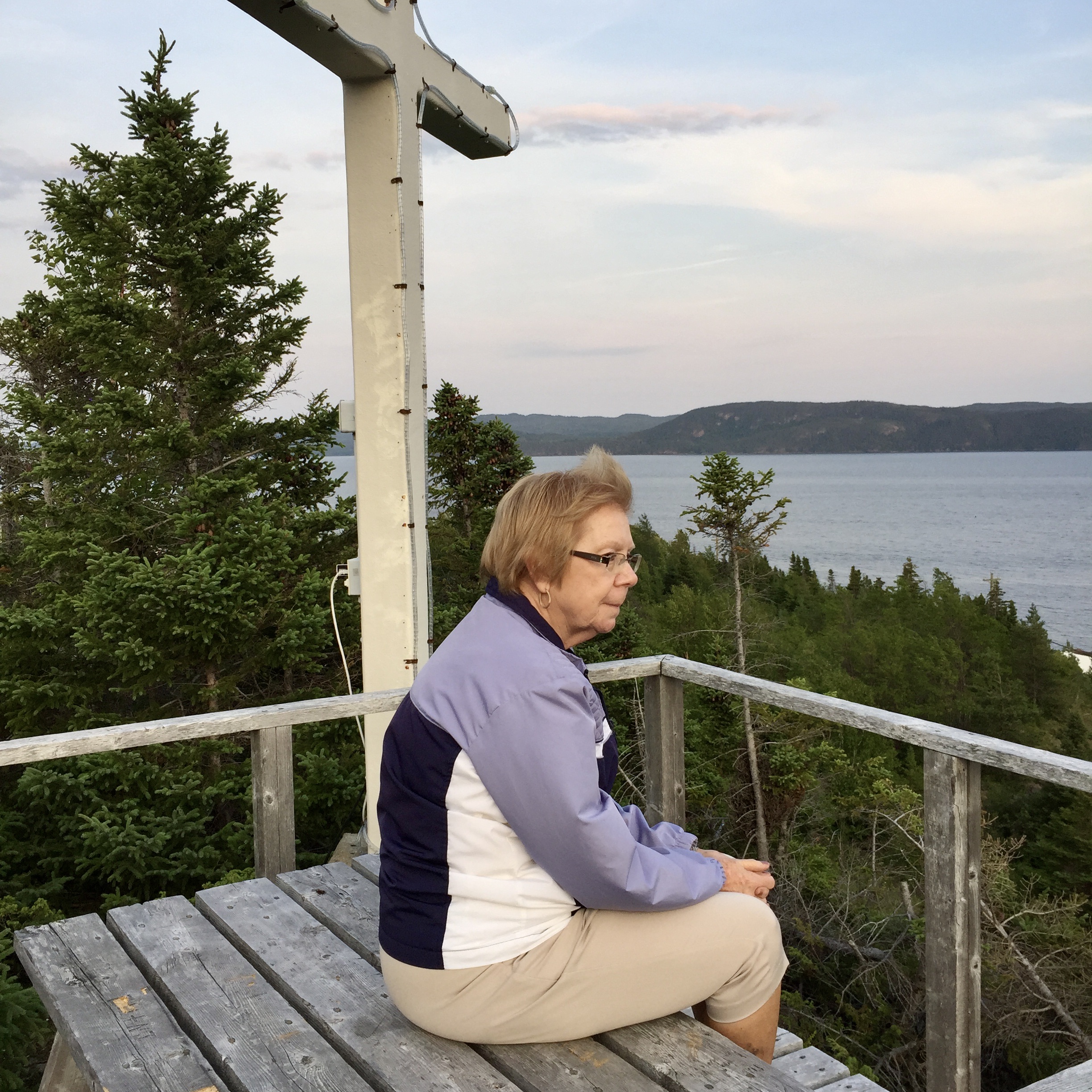
In the quiet of the cabin where I now write, I am gratefully in the moment. The sunset pictured below accompanied the evening. I don’t know what the remainder of August will look like, but all I feel right now is peace. And maybe a little excitement.

The Fridge is Empty: the Reality of Food Insecurity

Food insecurity is the condition of not having access to the quantity and quality of food that is required to meet one’s needs. The Dale is in relationship with a lot of people who experience this type of insecurity, and we’re noticing a trend: more and more people are coming to identify themselves as “food insecure”. Second Harvest, a food rescue organization of which The Dale is a part, agrees. In 2022 the number of people served free food by non-profit organizations increased by 134%. The projection is that this will increase by another 60% in 2023. 

According to Canada’s Food Price Report, the average cost of food per month for an individual is between $311 and $347. At The Dale, many of our community members are unable to work and are therefore recipients of ODSP (Ontario Disability Support Program). The maximum one person can receive is $867 per month. Consider that the average cost of a bachelor apartment in Toronto is $1317. It’s not hard to do the math. Unless you have access to affordable housing (and maybe not even then), you already don’t have money to buy food. 

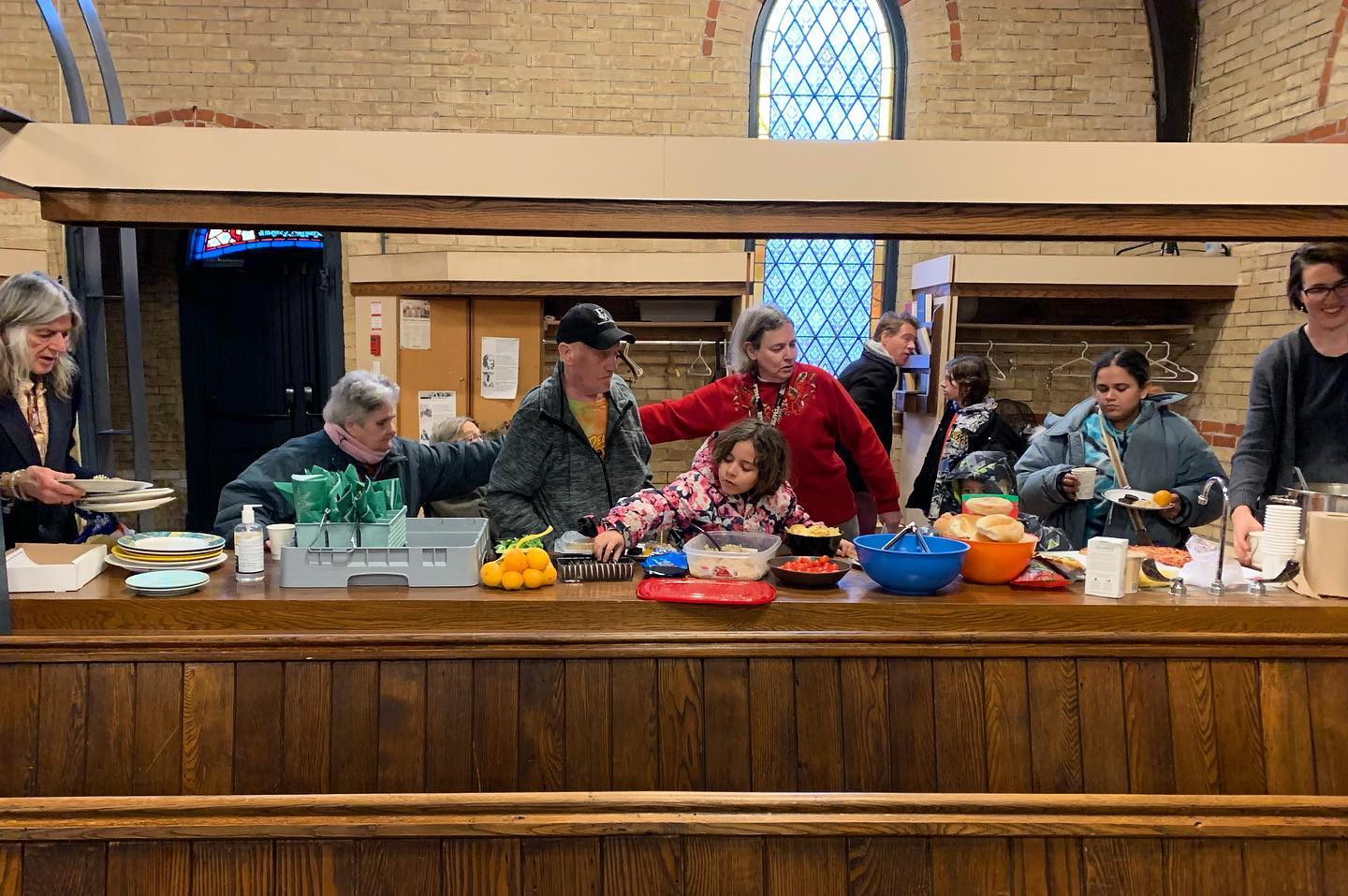
The line-up for food at The Dale meanders along Cowan Avenue. We set up tables from which we distribute bags of food, including a hefty meal provided to us from Second Harvest, served either hot for those who live outside or frozen for those who have the ability to heat it up. We include other items too- this week there was a bottle of water, a bag of grapes and a good handful of cookies. We admittedly don’t love having to ask people to line up, our preference being to eat meals around tables together. However, the pandemic put a cramp in our style that we are still recovering from. Our drop-in spaces all closed and have yet to re-open to us. 

There are some weeks where there is a heightened sense of urgency for food, especially near the end of the month. We try our best to assure people that everyone will receive something, even when we can feel our own anxiety bubbling up at the sight of the lengthy line. Somehow it almost always works out, for which we are incredibly grateful. 

Food insecurity can be difficult to know how to address, especially with the rise in the cost of food generally. It can be alarming to know that what accompanies the shortage of food is the alarming WASTE of food. Second Harvest notes that 11.2 billion tonnes of avoidable food waste occur in Canada each year, which includes, but is not limited to unsold food from restaurants, unharvested produce, and food left to go bad at distributors (not to mention our own refrigerators). 

The danger in sharing statistics and even about The Dale’s “line” is that the humanity of this situation can be lost. Not having access to food, a basic necessity of life, is a scary reality for a lot of very real people. And just think about all the additional benefits of food, including the way we gather around it and how it nourishes our spirits and not only our stomachs. Some of my most distinct memories are attached to the smell and taste of food. I can’t eat certain things without thinking of the people who first prepared those dishes for me. We hear similar stories at The Dale all the time.

Food has the ability to gather us together. May this crisis, which can help fuel our collective response to it, do the same.

Corn on the Cob

I was handed three cobs of corn this week while hanging out in a parkette. This was to be added to a growing number of cobs in the fridge at 201 Cowan Avenue, the building that we consider The Dale’s ground zero. Every cob has come from the same community member, someone who is at nearly everything we do, including our monthly potluck.

The potluck is something that we relaunched just this year after a long pandemic-forced hiatus. The invitation is always the same: bring something to contribute as you are able, whether it be a bag of chips from the Dollar Store or something you cook. We will pile together whatever we get (we never prescribe what to bring) and turn it into a feast. 

I am often reminded of the story of Stone Soup when thinking of this gathering. The folk tale is about a traveler who enters a village looking for a safe place to sleep and a hot meal. The villagers can offer a bed but because of a poor crop they have very little to eat and are just getting by. The traveler offers to make stone soup, something unheard of in the village. He asks for a pot, some water and wood to start a fire. He drops a special stone into the pot, smells the aroma and mentions that stone soup is even better with a bit of cabbage. By the end of the story the villagers all contribute whatever bits they each have- cabbage, a carrot, a handful of mushrooms, creating an amazing soup that they all share. 

Apparently, there is a grocery store in Parkdale right now that is selling corn for a great price. This sparked the imagination of our community member, who felt they could manage to gather together enough change to buy and contribute corn to the next potluck. I have agreed to make sure it is cooked and will also be bringing butter and salt. I love the look on our friend’s face every time they manage to bring a little bit more. It reminds me how necessary it is for every person to have opportunity to give. 

I get handed a real variety of things on the street. I can honestly say that before this week, corn was never one of them. I’m really looking forward to a steaming platter of corn being added to the table, all thanks to our friend. In the Stone Soup story there was more than enough for everyone to eat their fill and afterward they declared it was the best soup they had ever tasted. Hopefully the corn and everything else that fills out the meal will hit the spot in the same way.