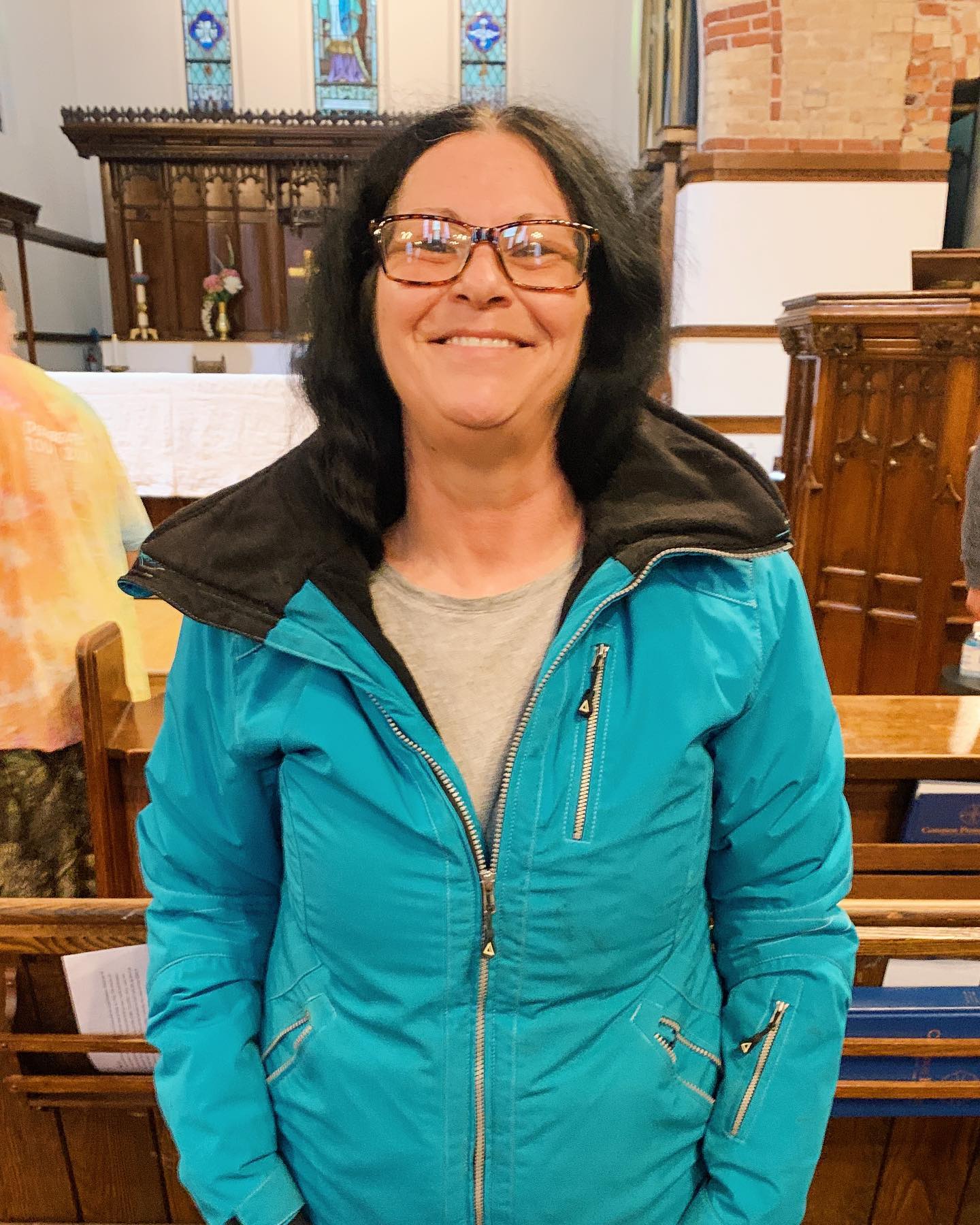
Steve, Steve-O, Steven

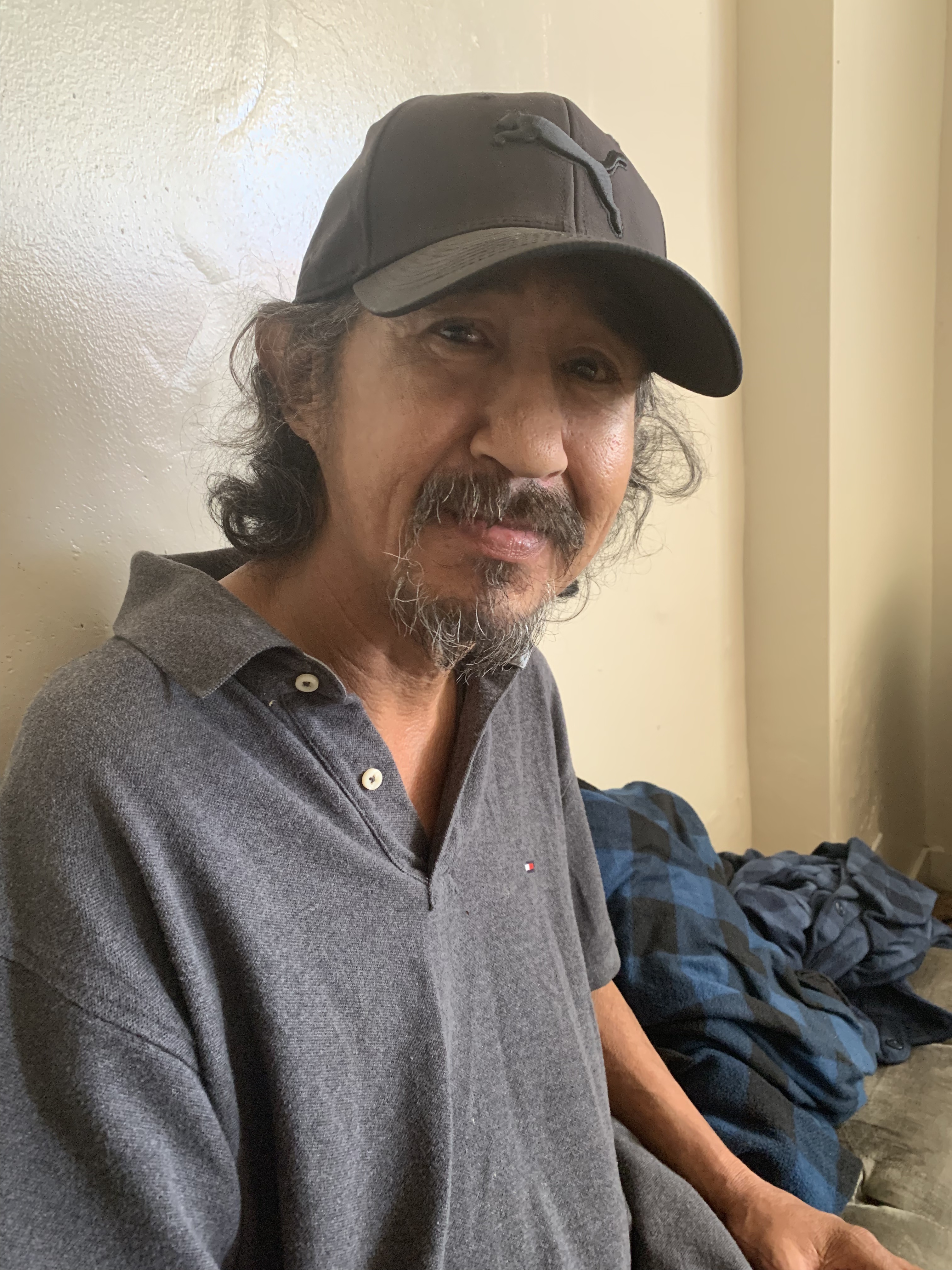
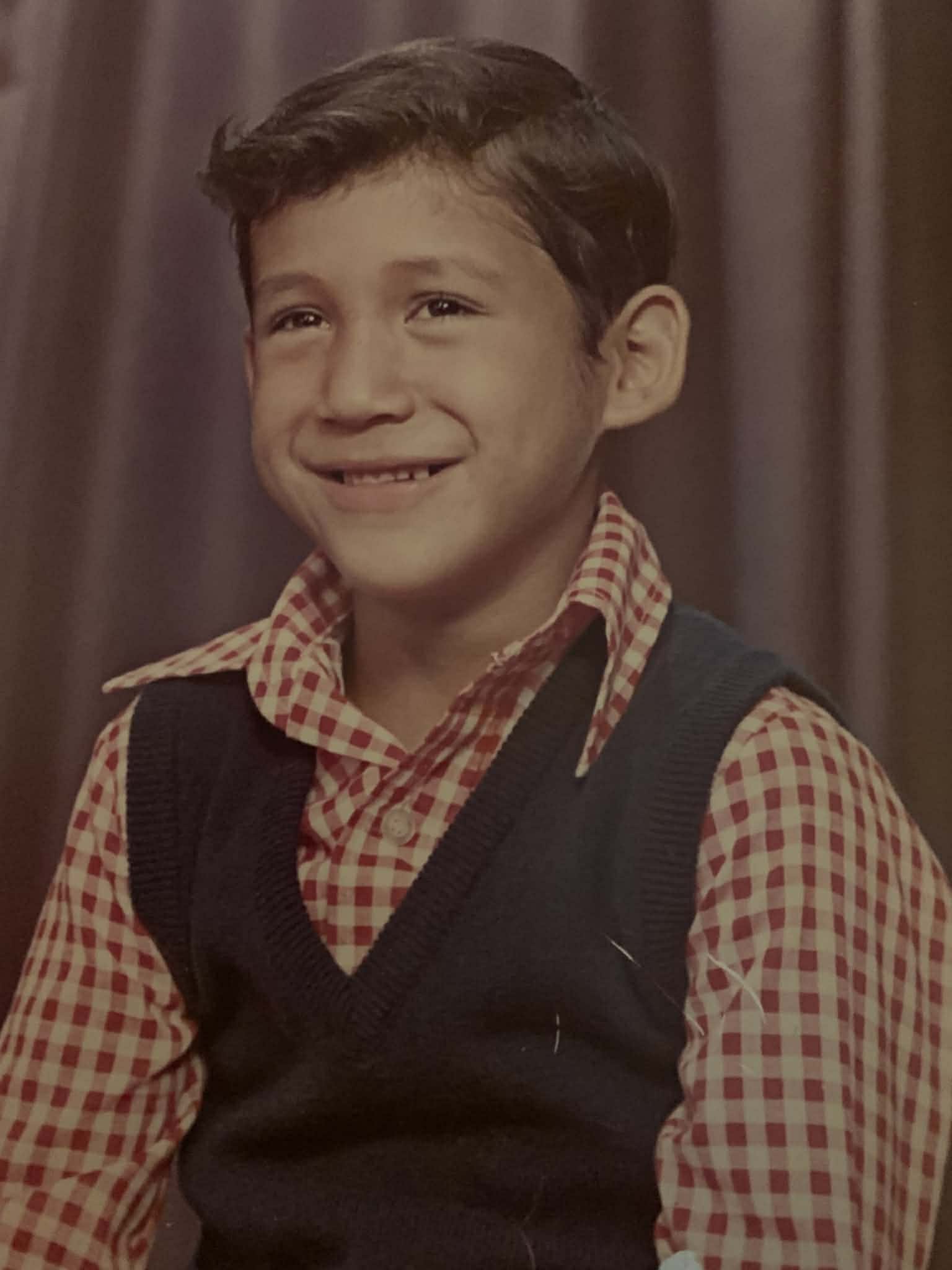
I actually can’t remember the very first time that we met, just that it was when I first arrived in Parkdale, nearly 20 years ago. He would go by Steve generally, Steve-O to many, and Steven to his family. A proud Anishinaabe man from Beausoleil First Nation, Steve was a well-known fixture in Parkdale. I would usually spot Steve sitting in a bus shelter or on the steps of the church on Cowan. He almost always had a crew around him.

When I think of Steve in that crew of people, I picture him quietly in the middle of it all. He’d be listening to everything, often chuckling under his breath, until strategically dropping a one-liner that got everyone laughing. He had a great sense of humour- one that he maintained even in the most challenging times.

Steve had an apartment of his own, one that he shared with many. He was hospitable that way, unable to leave someone stranded on the street. His openness sometimes led to trouble, and so he’d have to clear people out, but only until a new round of hosting would begin.

Steve and I had a lot of conversations about the losses he experienced, especially being predeceased by his mother, Joanne; his father, Frederick; and his brothers, Freddy, Richard, and Kenny. He would talk about how hard it was to be the only one left in that immediate circle. His tears would fall easily, though he would lament that too: “Erinn, I don’t want to cry.” Often, he would wipe his eyes with both hands and start to smile as he named his extended family, including nieces, nephews, aunties, uncles, great-nieces, and great-nephews.

A number of years ago, Steve stopped me on the street and asked me to find his family. He had lost contact and didn’t know how to find them. I gulped, worried I would be unsuccessful, asked for some hints about their whereabouts, and decided to put on my investigator hat. Amazingly, I found them, only to discover that they, too, had been looking for Steve. Steve’s nephew came to the city to pick him up and drive him up north for a reunion. I will never forget that moment.

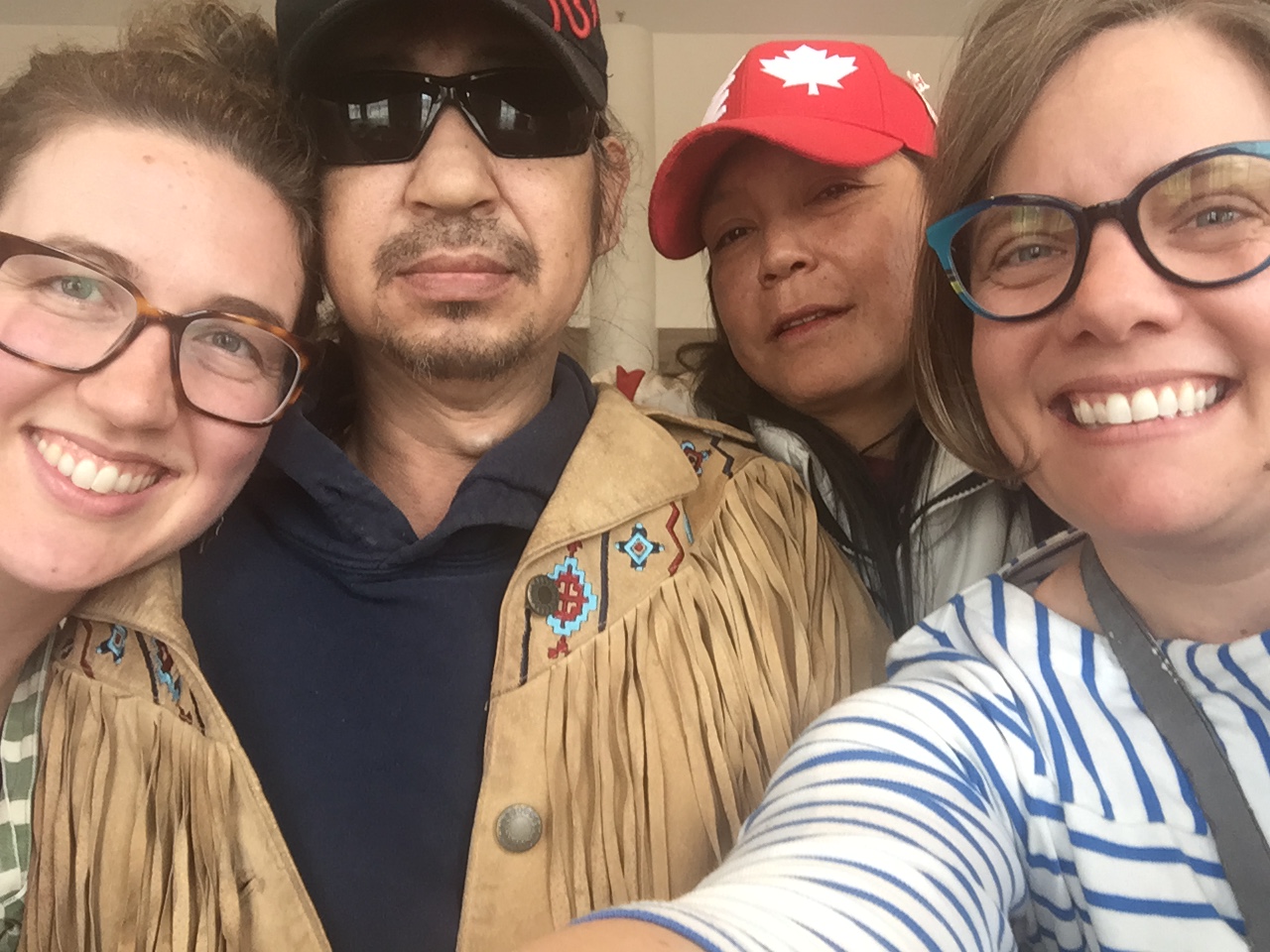
Nor will I forget the time Joanna and I drove Steve to see his niece in the Midland-Penetanguishene area. He kept us entertained with stories the whole way. They had a visit, and then the three of us got back in my van, stopped for subs, and drove all the way back. I wish I had recorded our laughter that day.

For so many years, it was common to see Steve around Parkdale: at the Health Centre, outside the LCBO, on a bench, or in a Dale drop-in. Lately, it became uncommon to see him out and about. His health had taken a real turn, in such a way that we were longing for him to get more medical attention. In true Steve fashion, though, he wanted to live on his own terms, which included staying in his place and not going to the hospital. And so, we would regularly visit him at home.

Last Saturday night, Steve died. Joanna and I were just about en route to see him when his niece shared the news. Because his family is not in Toronto, we were able to go in their stead and sit with Steve while the hospital made arrangements.

It was so sad, and felt so sacred, to be in that dimly lit hospital room. I prayed over Steve. Joanna and I shared memories and spoke words of love and encouragement to our friend. It was, and I still feel shocked to say it, our last visit.

It was not however, the last time I would see Steve. Today, Dion and I drove up to Cedar Point in Tiny, Ontario, to board the ferry to Christian Island, home of the Beausoleil First Nation. The hearse carrying Steve was on that same ferry, carrying him home. We joined his family as they gathered around him in remembrance. Steve will be laid to rest with his ancestors: his mom, dad, and brothers.

Steve, Steve-O, Steven- I love you, buddy. Chi miigwech for being my friend. You are already missed, by me and so many others. We are going to have a service for you at The Dale. You always asked me to play Will the Circle Be Unbroken, and so we will be sure to include it.

We will try to do you justice with our stories and, hopefully, some of your one-liners.

Rest now. This is a see you later, not goodbye.

Steven Ronald Jackson, June 21 1968 – August 15 2026

The Againness of Things

I turned on the radio in my vehicle, not sure what I wanted to listen to, when I heard an interesting thought being shared in an interview about “the againness of things.” The premise was that when we lean into the repetitive, sensory routines of our lives, gratitude can have room to emerge. For instance, taking time to feel the warmth of the sun can help us engage with the present moment and shift how we inhabit the day. Even though I have felt the sunshine countless times before, I can experience it anew in its “againness.”

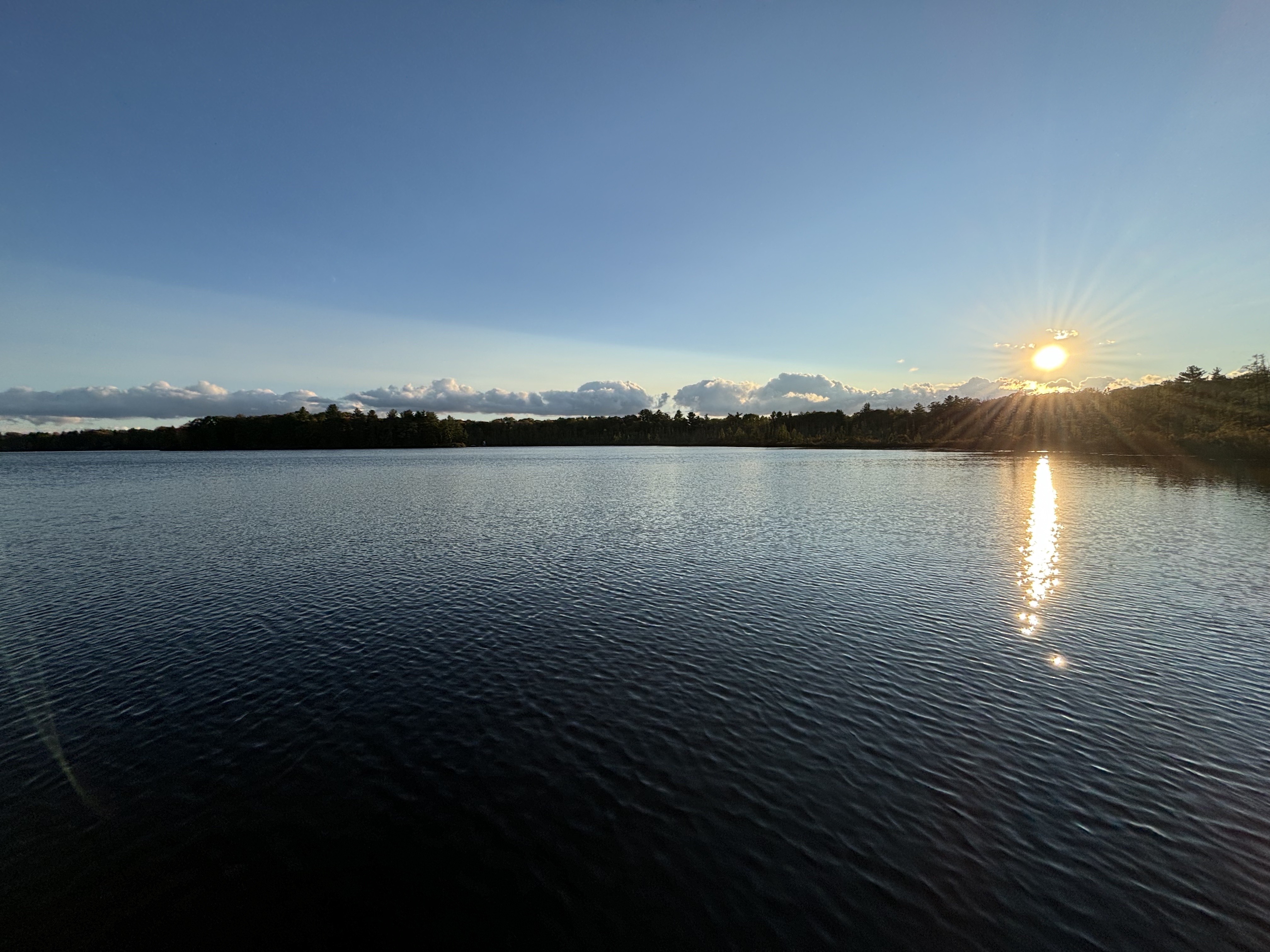
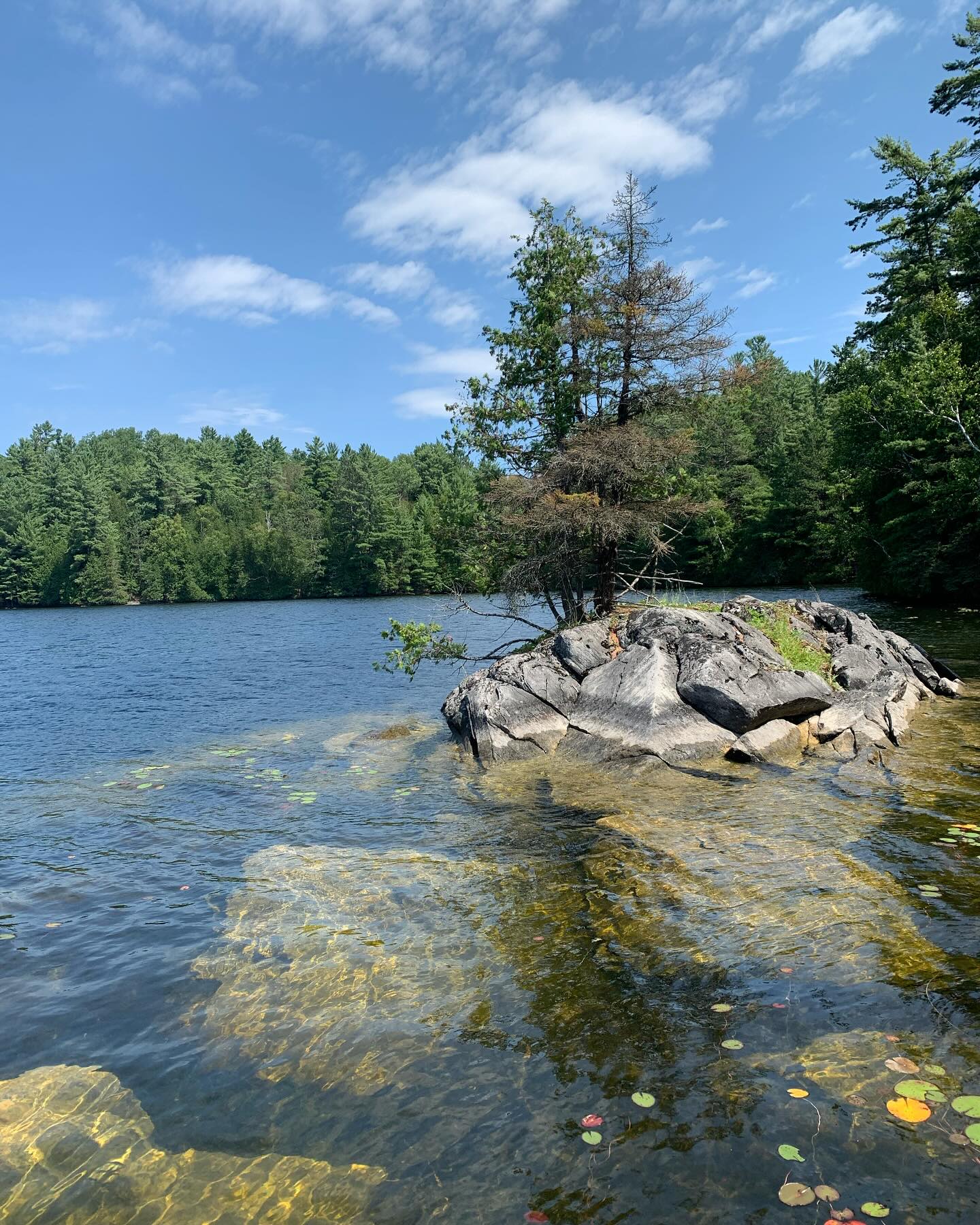
I was driving to the Kawartha region when I turned the radio on. I take time off from work every August, and every year I make this pilgrimage to a secluded cabin generously shared with me by friends. More often than not, I am alone. This time, my visit would be split between a few days with my daughter and a group of her friends, and a few solo days.

As I opened the door, I was greeted first by the familiar scent: a combination, I think, of pine, fresh air, and the faintest hint of woodsmoke. I unloaded the groceries I had purchased on the way up, my suitcase, a stack of books, and a miniature bookstore kit. Once settled, I immediately got ready to jump in the lake.

Which is when I thought, I want to notice the againness of floating around in this lake.

I jumped in and felt the coolness of the water envelope me. I took a deep breath and dove under the surface. When I popped up, I shook my hair, looked up at the sun, and grinned.

While soaking in the water, I took notice of how Cate’s friends were seeing this familiar place to me with first-time eyes. I loved hearing their oohs and ahhs. Their appreciation for the cabin and the land it sits on heightened my own, which I didn’t even think was possible.

In the evening, we all gathered around the long table in the kitchen to share a meal. We were each invited to share a high and a low from the day. My low was how long it took me to get out of the city because of traffic. My high was arriving.

As I thought about my answer, I realized my high wasn’t simply arriving. It was remembering how to be held by the lake. There is something about floating that resists hurry. It invites me to release my grip, to trust the water beneath me, and to notice what has been there all along, including the warmth of the sun, the sound of laughter drifting from the dock, and the scent of pine carried on the breeze.

Maybe that’s the invitation. To notice the againness of things. To receive familiar gifts as though they are new. Because when we do, we become present to the extraordinary hidden within the ordinary.

Story Day in Newfoundland: Holding Many Emotions

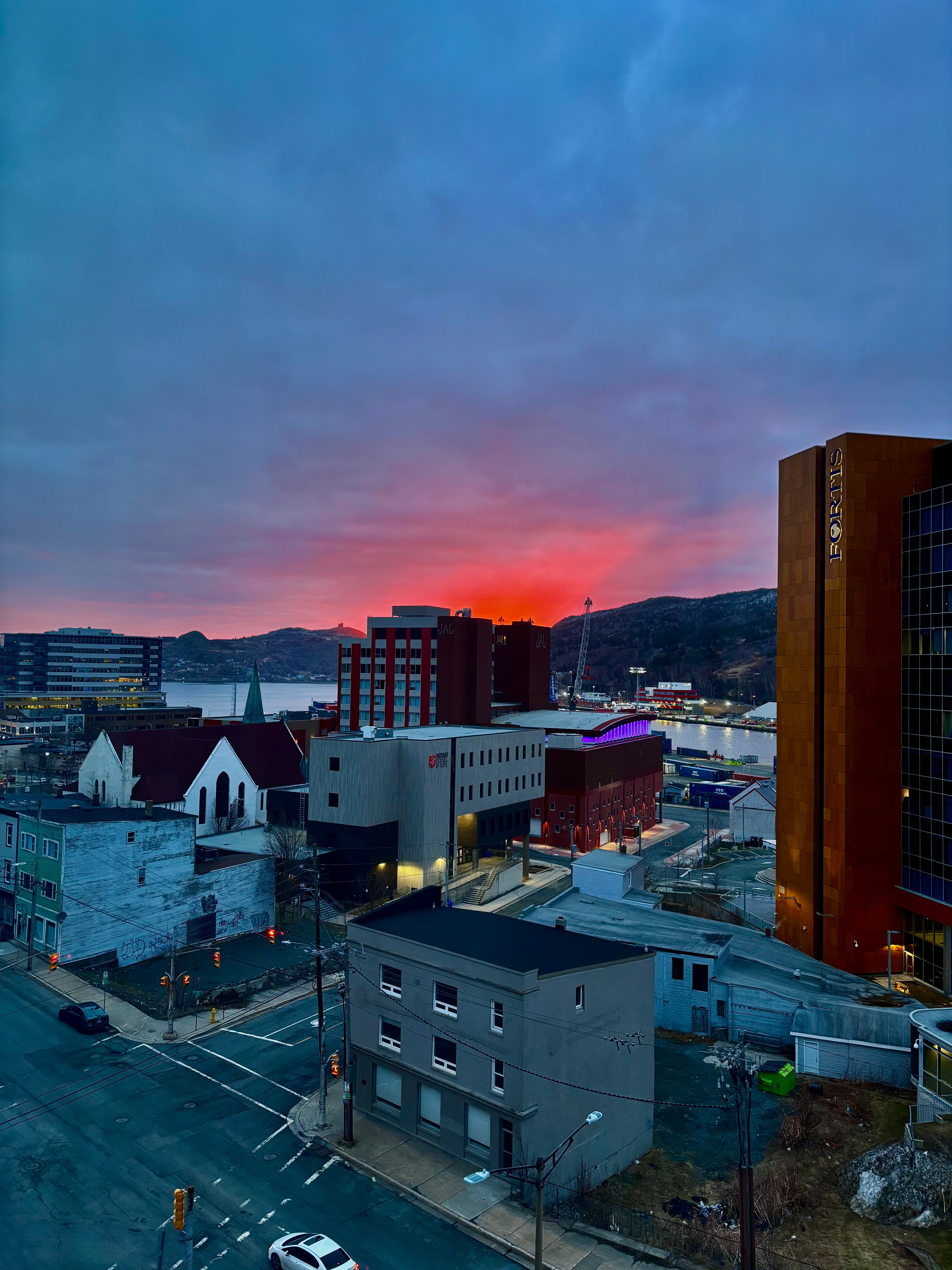
It’s early morning and the sky is red. Red at night, sailor’s delight; red in the morning, sailor’s warning. Isn’t that what they say? I have been thinking about references like that ever since landing in St. John’s, Newfoundland, the site of the most recent Story Day.

Newfoundland is the home of my husband. The first time I was ever here was to meet his family. That was in the 90’s. The first time I saw St. John’s was on that same trip. We took a bus from his hometown of Springdale on a May long weekend- it snowed. I have the pictures printed on film to prove it.

Since that time I have grown to love this island: the salt water air, the ever present scent of wood smoke, the ponds and lakes and massive ocean, the tea with carnation milk, the boil-ups of just picked mussels on the beach, the hospitality of the people and the lyrical quality of their speech, and the way I have been enfolded- despite being a mainlander from Toronto.

As is the case so often for me, I am holding both sorrow and joy as I reflect on being back in this province, what many call The Rock. I am here with my daughter Cate, my team from The Dale, and many beloved colleagues and friends. My husband’s absence is glaring. Dion lives in Long Term Care because of Multiple Sclerosis. Though we looked into ways to get him here, the obstacles to travel were simply too big. Commercial flights need to do better for people who are in wheelchairs.

And so, I am holding a variety of emotions. As a poem that a friend showed me yesterday says, “Some of you say, ‘Joy is greater than sorrow’, and others say, ‘Nay, sorrow is the greater.’ But I say unto you, they are inseparable”. (Gibran)

My sorrow has peaked at moments that I know Dion would have loved. I hate what MS continues to take from him and our family. While he has been supportive of all of this happening, I know that it has come at a cost.

My joy has been found in helping to curate and co-create a space where people shared vulnerable stories of their own experiences of isolation and belonging. The theme, “You Are Not Alone” has proved appropriate and necessary. I have loved standing back and listening to the murmur of people connecting through conversation, laughter and tears. Witnessing people listen across difference, even when it may have caused discomfort or concern has been beautiful. I was asked to dance at a pub in front of all of my people, and instead of saying no I said yes. Another friend curated a moment for me on the edge of the easternmost point of North America at Cape Spear, by slipping her headphones over my ears and playing a song that helped me consider the landscape and the Creator with awe. Travelling with The Dale team is always a dream, as is hearing people comment on our deep connection. Having my beloved Cate in the mix is the best.

Story Day is no longer in its infancy. We were in pandemic times when I first started to dream of an event where people motivated by faith in Jesus to address issues of poverty and injustice could gather around storytelling, music and food. Since then we have held multiple gatherings in Toronto, with an expansion to Montreal last year. It was just this past Wednesday that people from across Canada came together in St. John’s.

Something is growing. There is an undeniable momentum to Story Day. I can feel it- in the rooms, in the conversations, in the courage it takes for people to show up and share. It’s exciting. And, if I’m honest, a little bit scary. I care deeply about what is happening, and I want to hold what is mine well, and what is not, loosely.

From the poem I referenced before: “The deeper that sorrow carves into your being, the more joy you can contain”. As I look back out the window, I notice the sky is no longer red with warning. It has dissolved into a soft and light blue.

Mints in Our Pockets

There was a message on The Dale phone from a peer asking me to call because they had some bad news to share. I can honestly say I was not at all expecting to hear that our beloved Rachael had died. The Dale team and I had seen her just two days before. She was upbeat, gave each of us a hug, and said she planned to be at church on Sunday. To hear that she died later that day from a stroke has left me stunned.

As I sit with this grief, a few things keep rolling around in my heart.

When Rachael first started coming to The Dale on Sundays, she found it very hard to sit still. In fact, she would pace and move around the room throughout the service. This went on for quite a long time. Nearly every week, she would give thanks in prayer for a place that both allowed and embraced her emotional and physical needs. Her self-awareness, vulnerability, and gratitude were striking.

Rachael had a hospitable heart. She greeted everyone in the room and offered each person a handful of mints. We started referring to this as her “Mint Ministry.” Even if she arrived a little late, she would quietly go about her distribution. I recently found some of her mints in my pocket and suspect that will keep happening for a while. It’s amazing how a small act of kindness can have such a lasting impact.

Every time I saw Rachael, she gave me a long hug and earnestly asked how I was. I know she regularly prayed for me, Dion, and Cate. She shared openly about her own life and always invited me to pray for her and for those she loved — especially her daughters. Sometimes we would tuck ourselves into a corner to pray together before she left for the day.

Rachael was good at noticing what needed to be done and simply doing it. During communion, we have a bowl where people place their cups when they are finished. Rachael quietly became the one who carried the bowl around the room. At our Bible study at St. Francis Table, she would arrange the chairs and take the Bibles out of the storage closet before we even arrived.

I still remember the first time Rachael sat through an entire Sunday service. And then another, and another. It was remarkable to witness — not only for me, but for our whole community, many of whom long to experience similar healing and hope. Rachael both received welcome and offered it. She reminded us that true belonging isn’t passive — it’s mutual participation. The one who once struggled to sit still became someone who steadied the room with her faithful presence.

It was hard to tell everyone last Sunday about Rachael’s death. A few had already heard; many had not. People shared stories about her. We cried. One person said she is the reason they always carry mints. Then someone picked up the communion bowl, making sure it was carried around the room just as Rachael always did.

Rachael’s legacy lives on — through mints in pockets, the passing of a bowl, and a community that learned from her how to welcome and serve.

1962 – 2026

Support The Dale: Community Care During Uncertain Times

There is no denying that the world is very unsettled right now. There is a lot of anxiety attached to ongoing conflicts, financial upheaval, and political uncertainty. I feel it, and I imagine you do too. You might wonder why, in the midst of it all, The Dale would launch a fundraiser. The reality is, The Dale is entirely dependent on the gifts of others to do what we do. We seek to create spaces of belonging for all, while making intentional room for people who are typically held at the margins.

In community we learn about one another’s needs, and for many of us this includes basic necessities that are simply outside of reach because of poverty, like hygiene products or socks. For some, becoming housed means starting from scratch, including needing a bed. These and other items are highlighted in The Dale’s Community Care Catalogue, giving you some very practical ways to support us. As always, we value support that is not financial too. If you are able to share about us on social media, or participate in one of our gatherings, or pray for us, we would love it!

Though times are uncertain, we continue to find hope at The Dale. We are grateful for so much, including our partnerships in the neighbourhood, the buzz of conversation in our drop-ins, the gatherings that take place outdoors, the ways we are learning to both give and receive in community, and our growing network of supporters. This work takes a village, and we have a wonderful one.

Check out the catalogue here: https://trellis.org/dalecommunitycarecatalogue

Life, Loss, and Community: Reflections from a Meaningful Retreat

I had a dream the other night. In it I was surrounded by people I have been missing from The Dale since their deaths. We were all together in a room simply hanging out. One woman walked over and said, “I haven’t been able to give you a bear hug in a while”, and then proceeded to enfold me in a long embrace. It all felt both ordinary and extraordinary. I woke with a sense that I had just been given a gift, and I haven’t been able to shake that feeling since. 

In the weeks leading up to my dream, I found myself thinking of my friends a lot. This was especially true during the planning of our first community retreat since 2019. One day I had to pull out a file folder with the sign-up sheets from previous retreats, which took me down a rabbit hole of memories. Though I know exactly who is no longer with us, I felt overwhelmed by the volume of loss and the reality that they would have been some of the first to sign up for our excursion.

I continued to feel the absence of these friends during the school bus ride up north to Camp Crossroads, the settling into cabins, and eating our first meal in the lodge. At one point I lifted my face up to the sky and said, “they would have loved this”. The moment was broken when some of our group came outside to join me in looking up. Together we breathed in the air that smelled of pine and wood smoke, commented on the beauty of the lake, and chatted about the plan for the evening. 

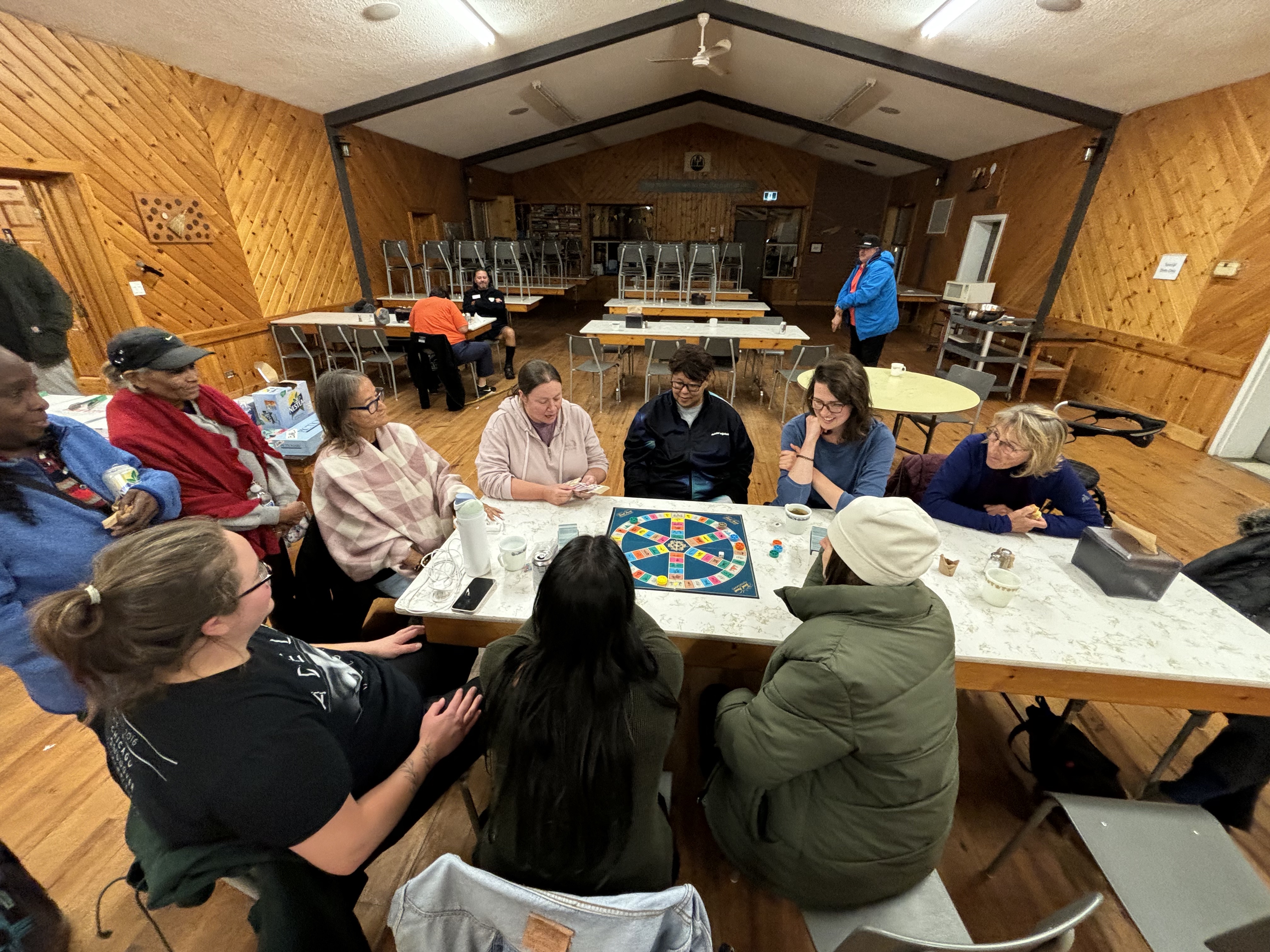
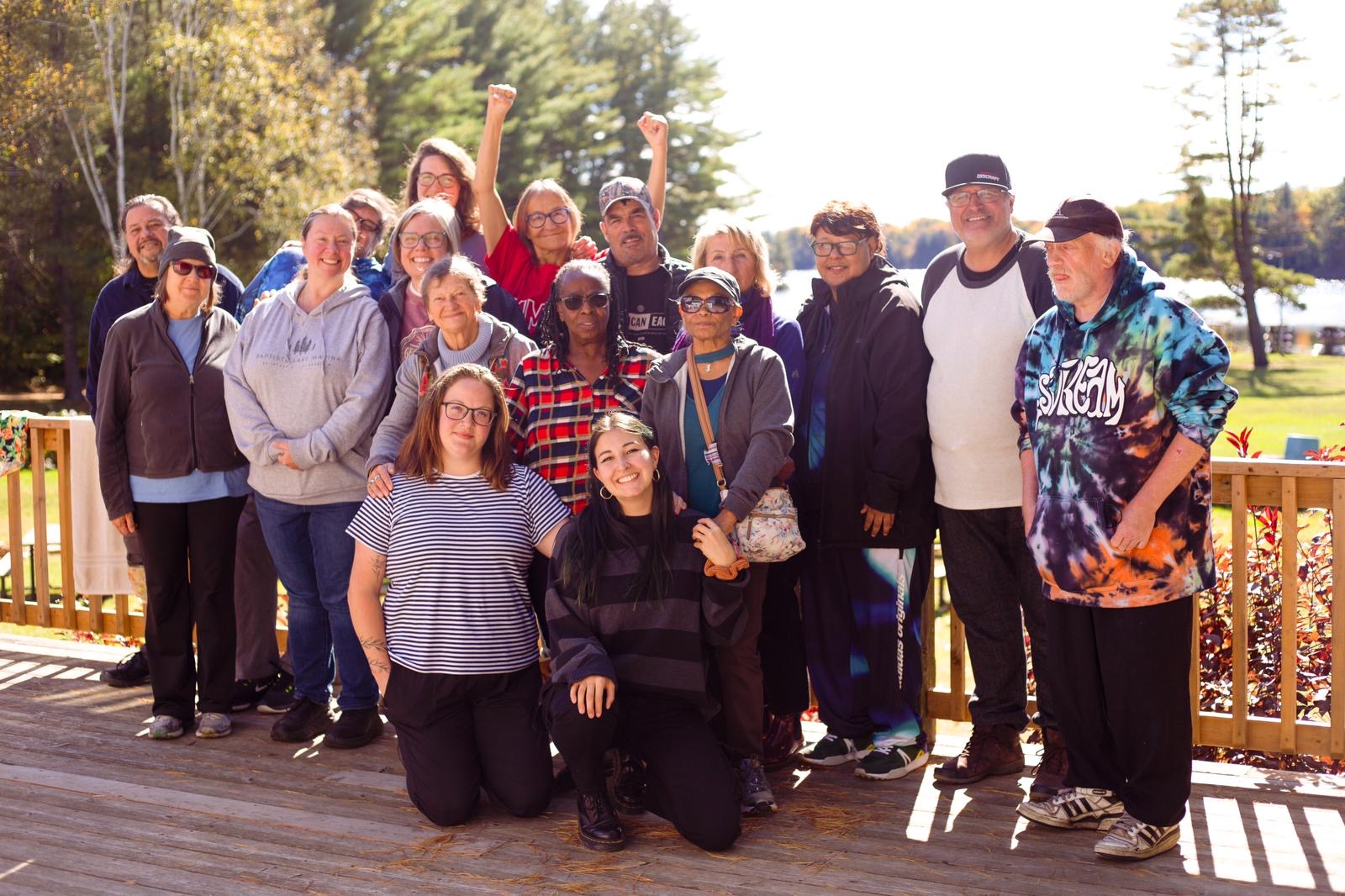
Over the course of the next couple of days, we went on walks, sat on the dock, put together puzzles, played games, ate lots of food, slept, gathered around campfires, took out boats, and talked. Joanna and I jumped in, and very quickly out, of the lake. Meagan’s kindergarten aged daughter Charlotte drew pictures of people as gifts. Some gathered for Morning Prayer. On the last day we sang, shared gratitude, and took communion together. By the end of it people felt closer, some commenting on how they are now more a part of the community. 

The retreat helped me to grieve and to hope. I felt able to name that I was missing people. I also got to be present with an amazing group of people who did sign up and get on that bus. Maybe that’s part of what brought about my dream. Life continuing does not mean forgetting. And remembering does not mean excluding. The table is wide and there is always room for more.

Cathartic Experience: Processing Grief and Fatigue

It always happens around Day 3 of my vacation. As I sit in solitude and my body begins to rest, the many things that are hard and contribute to my fatigue rise to the surface. This year in particular has been marked by a large amount of loss in a short period of time. While I am always trying to attend to my grief, 2024 has not made it easy to keep up. Even before the death of one person registered in my heart, another person was just as suddenly gone. Reflecting on this while sitting on a dock and staring out at the water, I began to sense the impending wave of emotion. I’ve learned to not resist.

What ensues is a mix of things. I ugly cry. I pray- sometimes wordlessly, and sometimes with so many words that I can’t help but trip over them. I try to breathe through the pain in a mindful way. At some point I can’t keep my eyes open and fall asleep in the sun. This time that nap was accompanied by a dream that one person had faked their death and I happened to spot them in a crowd. Side note: yes, I’ve told my counsellor about this. Overall, the experience lasts more than a day and is both painful and cathartic. 

I say cathartic because I know the stress, the grief and the fatigue cannot simply take up residence in my body. For me, letting these things hibernate means a stiff neck, chest and shoulders. A previous rotator cuff injury makes a re-appearance. My lifelong effort to calm an anxious gut becomes difficult again. Though my demeanor is generally calm (a trait I inherited from my Mom and is not fake), it can sometimes fool me into thinking I am more okay than is true. And so, taking the time to really notice what I am feeling, shaking it awake and giving expression to it has become necessary for my overall health and longevity in my work. 

A mess of things happened on that dock at the beginning of August. But, as we often talk about at The Dale, messy is also beautiful. The sun remained in its place and shone down on me, the birds accompanied my prayers, and the life under the water continued its work. I felt comforted by the truth that the world keeps turning and aware of God’s presence. The smell of sunscreen and someone else’s BBQ evoked memories that made me grin. The releasing of emotion finally gave way to a good kind of tired. And then by the second nightfall I fell into a dreamless and deep slumber.

I am now in the latter part of my holidays. I am slowly feeling more rested. I wish I could write that my yearly Day 3+ experience is some kind of magic bullet that makes everything better. Grief, as I’ve learned, is not something that you “get over” but that you move through. Dismissing it, though it might feel easier in the moment, does not make it go away. I find that when I reflect on the person who is gone and allow myself to really feel the loss, there is mysterious space created for healing. Remembrance is an important act of love. And I’m glad to have been reminded of it. 

Holistic Wellbeing: The Importance of Sabbath, Mutual Care, and Community

I am frequently asked: how do you take care of yourself? Some people want to specifically know how I manage in the work that I do. Others wonder what it looks like to hold the various aspects of my life in balance. As I think about answering, usually the first thing that comes to mind is, “I have no idea what I’m doing.” The truth is, I am stumbling along, just trying to take the next (hopefully) best step. Upon further reflection, I realize there are a number of values that have been instilled in me by mentors, pastors, friends, and family. In the moments when I am struggling to know what to do, I lean on the wisdom of others.

SABBATH

Marva Dawn says, “A great benefit of Sabbath keeping is that we learn to let God take care of us — not by becoming passive and lazy, but in the freedom of giving up our feeble attempts to be God in our own lives.” Sabbath is fundamental to my wellbeing. I am reminded that I cannot do it all, nor am I required to. And whew, is that ever a relief. I hold Sabbath on Fridays. The outgoing message on my phone alerts people to this. I’m not saying it is easy, or that there aren’t occasionally emergencies or other things that require my attention. I am though convinced it is worth it. It has been in the quietest moments of rest that I find myself reminded love is not earned by doing. I am, WE ARE, simply beloved- though there is oftentimes nothing simple about embracing that truth.

MUTUALITY

At The Dale I am not just doing something for someone else. Instead, the invitation is for us to do something together. We are all made to both give and receive, and we lose a part of ourselves if we are always the giver or always the receiver. I call this mutuality. Holding this posture also invites me to see every person I encounter as unique, noticing that they have their own set of experiences which contribute to the way the world is viewed. In turn, I then have to allow people to see me. As relationship develops, there is opportunity for me to both offer care and receive it. Mutuality can at first feel quite vulnerable. The typical power dynamic suddenly shifts. For me, embracing both sides is life-giving and I think one of the biggest contributors to my longevity in this work.

COMMUNITY

I cannot do this life alone. I need people. I need those who know my strengths and my weaknesses, and who out of love and care call me out on things; who I can share the hard stuff with; who I can laugh with until I’m crying. And I need to be that person for others. I am so grateful to have friends who are all these things to me. I believe that we humans are built for community, which is why isolation (which is different than choosing solitude) is so debilitating and lonely. At The Dale it has been very important to grow a staff team, one where we know one another well and trust that we all have each other’s backs. The Dale as a whole spends a lot of time together, around tables, outside, in various spaces around the neighbourhood. We eat, we make art, we sing, we cry, we pray, we waste time together- all of which serves to nurture community.

COUNSELLING

I am a big fan of therapy. I see a counsellor nearly every other week. I also see people who function as spiritual directors and coaches. This might increase if I am in crisis, but it does not decrease when things are steady. I deeply value the active listening, question-asking, feedback, homework, prayer, and wise counsel of these sages. I have come to better understand myself through their care and been given tools to better manage my life generally. I know it is a privilege to have the resources for this type of support, something I do not take for granted. I think in the absence of counselling, the necessity of community is yet again high-lighted.

HOME

I love my family and the life we have built together. I count being a partner to Dion and a mother to Cate two of the greatest gifts in my life. Dion and I have seen each other at our best and at our worst. We have weathered a lot of hard stuff, and as one friend recently commented, I still laugh the loudest with him. When I look at Cate it is like my heart is walking around on two legs. With all of this in mind, it has been very important that I not let work consume me. As a family we spend a lot of time together, even in this new stage where Dion lives in Long Term Care and Cate is launching into adulthood. We have developed what some think of as a ridiculous amount of traditions and we stick to them. Dion and Cate participate in the life of The Dale whenever possible. My home life helps to ground me.

I was going to make prayer a section of its own, but I realized that for me, it has to cover everything. At its most basic, prayer is a conversation, and folks, I tend to be in conversation a LOT- sometimes it is calm and peaceful, other times it is choppy and frantic. I ask a lot of questions. I wail. I cheer. I hope. Always I am given strength that is not my own, which reminds me of one of my mother’s favourite Bible verses: “My grace is sufficient for you, for my power is made perfect in weakness.” I suppose I have buried the lead. How do I manage this challenging and beautiful life? Through prayer and by grace. Both of which have directed me to Sabbath, Mutuality, Community, Counselling, and Home.

Homage to a Van

Years ago, Dion and I purchased a wheelchair accessible van with the financial help of many people. At the time Dion was in a mobility scooter and could ride into the van, transfer into the front seat, and drive using hand controls. Even after a wheelchair became necessary for Dion and he stopped driving, it remained an important form of independence for him. Our family can get around together, including to places beyond the boundaries of Wheel Trans (the accessible arm of public transit in Toronto). Since Dion’s move into Long Term Care it has helped us maximize time together. The van has also been an important part of my work at The Dale. It has served as an office, a storage unit, and a community outreach vehicle. 

Not even two weeks ago the van died. The end came as a surprise. I took it in to have the brakes looked at, only to be told there were much bigger problems that couldn’t be fixed. We got a second opinion which matched the first.

When I told folks at The Dale, I wasn’t sure what the response might be. I get that having a vehicle is a privilege, one that most of our community does not have. People expressed such concern and said they would pray for our family. Once again, I felt cared for and seen. I was also reminded that the vehicle has meant a lot to many people, including those who like Dion, use mobility devices. It has carried people to picnics and restaurants and funerals and waiting rooms and court. Once we had to transport someone’s beloved deceased pet to a clinic. We have rolled down the windows and blared music while travelling on the highway. There are a lot of memories. 

During last Thursday’s Breakfast-to-Go, someone expressed to me their true concern for Dion in all this. They went on to recount some of their favourite experiences of the van. Shortly after, my co-workers Joanna, Meagan and Olivia reported on two exchanges they had with people about the van. One person expressed their true sadness about its demise and how it really deserves a proper burial. Another mentioned how helpful it has been to see it parked in the neighbourhood because it signals that I am around. I wanted to both grin and have a little cry. Who knew a beat-up burgundy Toyota could have such an impact? I’m grateful that we have been able to share it in such a way that people came to count it their own. 

The van got towed away to a scrap yard last week. And so, with very little fanfare, it is now gone. We’re not really sure what is next. There are pros and cons to every solution we are considering, including not having a vehicle. I’m glad that the van, while we had it, was used to its full potential. I hope that whatever comes next will serve our family and extended community just as well. 

The windshield of the van was often decorated with gifts, in this case paper cutouts, by community members of The Dale.

Gratitude During Bleak Times

The weight of the world is heavy. I say this as I sit in a comfortable chair in my warm home in a country that is not at war, keenly aware of my privilege. I can rest tonight. That will not be true for everyone, including people I know who today will [try] to sleep outside. Despite my personal circumstances, I can feel overwhelmed and helpless. I long to participate in the work of justice, and try, to the best of my ability to support those doing the same. I weep with those who weep.

A long-time friend and core community member of The Dale has been regularly reminding me of the need to speak our gratitude and share our testimonies of hope in the midst of the darkness and bleak times. For her, it does not cancel out the truth of what is difficult. To me, it is a subversive act in a community such as ours, one that is well acquainted with poverty and all too often victimized by established systems.

With this in mind, I have been reflecting on a number of things that have happened at The Dale in recent months. Like:

One day every time a member of the staff team said, “you know who we haven’t seen in a long time?”, we would see that person. It lasted all day and into the evening long.

We have an email thread going with nearly every person involved in the support of a community member- I’m talking social workers, family doctor, home and community care support workers, and The Dale. In what is a very challenging situation, actually being able to coordinate and communicate in this way is helpful. It’s not perfect, but it makes a difference.

It’s been a transition for the community to go from having a meal-to-go on Mondays, to having a drop-in where we can eat around tables again. Even the best change can be challenging to settle into, but it’s happening! People are getting involved, which is exactly what our core principle of inviting people into full participation is about. Some set up or take down tables, others re-fill the coffee, more and more are spending time throughout the morning chatting and building relationship. There is real effort toward protecting the peace of the space together.

One evening a group of us wandered around the neighbourhood on what we call outreach. Twice we found ourselves gathered in a circle to pray. Both times we imagined that it looked like something we had orchestrated or maybe even forced. Neither time was that the case. Instead, we were invited to gather, to listen, to share tears, to pray and notably, to be prayed for.

I find that when I stretch the gratitude muscle it helps me catch my breath. It also fans my desire to keep up the work of seeking justice and peace-making, because I want for everyone to have a list of things that are good in their lives. As my friend often says, “I am so grateful, and I want that for everyone too”.