Speaking Their Names

The room was already prepared when we arrived: vases of long-stemmed yellow roses graced the center of each table, a guest book waited near the entrance for people to sign, and a screen scrolled through the names of members of the Parkdale Activity Recreation Centre (PARC) who had died over the past five years—many of whom were also deeply connected to The Dale.

Over 126 names.

As I read through the list in silence, I could feel the grief rising in me. It stopped just behind my eyes—or so it seemed—hovering close to the surface, unsure how to make its way out.

As friends and partners, The Dale and PARC came together to create this service of remembrance. It had been a long time since PARC was able to hold a memorial of this kind, and we were eager to help. Joanna and I met several times with staff members to plan, and the whole team took part.

During the service, I sat behind the keyboard beside Max and Isaac on guitar and bass. Together, we created pauses between the reading of names with songs—songs the whole room joined in singing.

An Indigenous Elder opened the gathering, reminding us that those who have gone before us are our ancestors—people we can continue to hold close.

It was a hard afternoon. And a good one. Strange how something can be both heavy and freeing at once. We needed to speak our friends’ names aloud, and to do it together. Over the course of the afternoon, a little air was released from the growing balloon of grief. The pressure behind my eyes slowly eased as the tears came and the memories resurfaced, all held within a room full of people who understood.

I left PARC feeling tender. I know the depth of my grief reflects the depth of my love. Still, at the end of the day, death hurts. Though I cling to my faith that death is not the end, I miss so many people. The number keeps growing, and is beyond 126.

And yet, even in the ache, there is something unbroken: the call to keep showing up, to keep building community, to keep loving. As Mary Oliver wrote:

“To live in this world
you must be able
to do three things:
to love what is mortal;
to hold it
against your bones knowing
your own life depends on it;
and, when the time comes to let it go,
to let it go.”

I’m still learning how to do that. But I think that’s part of what it means to be alive.

Life, Loss, and Community: Reflections from a Meaningful Retreat

I had a dream the other night. In it I was surrounded by people I have been missing from The Dale since their deaths. We were all together in a room simply hanging out. One woman walked over and said, “I haven’t been able to give you a bear hug in a while”, and then proceeded to enfold me in a long embrace. It all felt both ordinary and extraordinary. I woke with a sense that I had just been given a gift, and I haven’t been able to shake that feeling since. 

In the weeks leading up to my dream, I found myself thinking of my friends a lot. This was especially true during the planning of our first community retreat since 2019. One day I had to pull out a file folder with the sign-up sheets from previous retreats, which took me down a rabbit hole of memories. Though I know exactly who is no longer with us, I felt overwhelmed by the volume of loss and the reality that they would have been some of the first to sign up for our excursion.

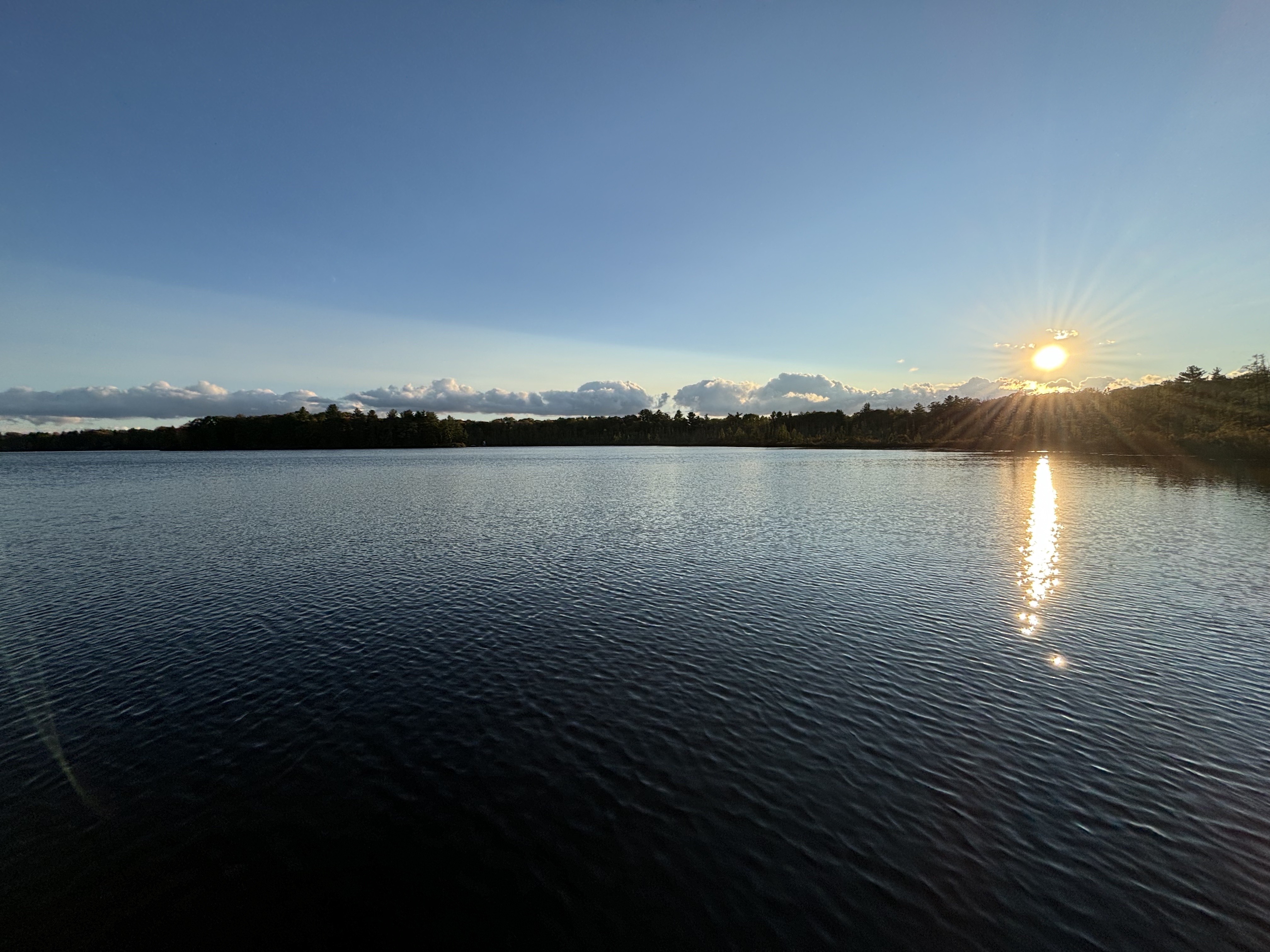
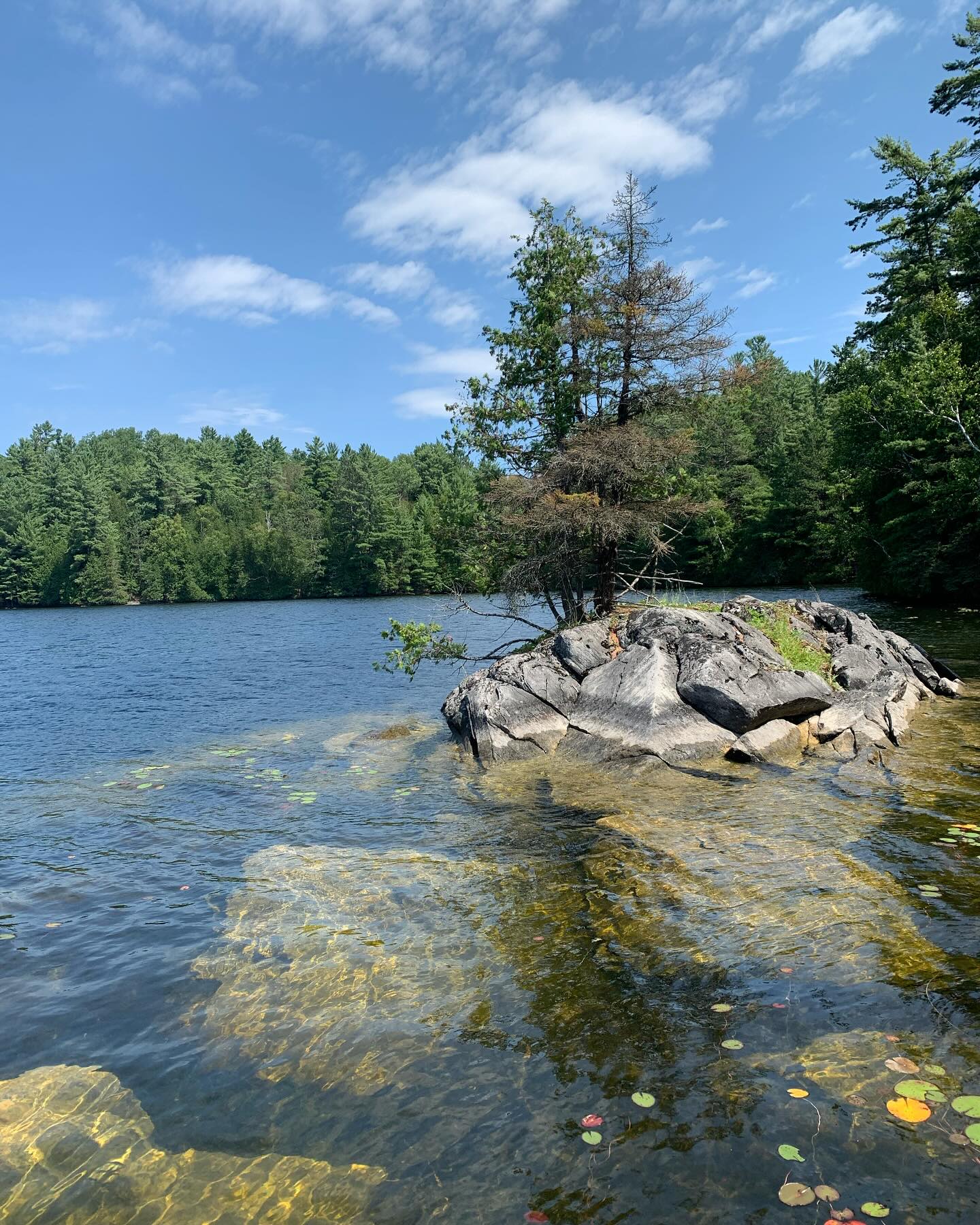
I continued to feel the absence of these friends during the school bus ride up north to Camp Crossroads, the settling into cabins, and eating our first meal in the lodge. At one point I lifted my face up to the sky and said, “they would have loved this”. The moment was broken when some of our group came outside to join me in looking up. Together we breathed in the air that smelled of pine and wood smoke, commented on the beauty of the lake, and chatted about the plan for the evening. 

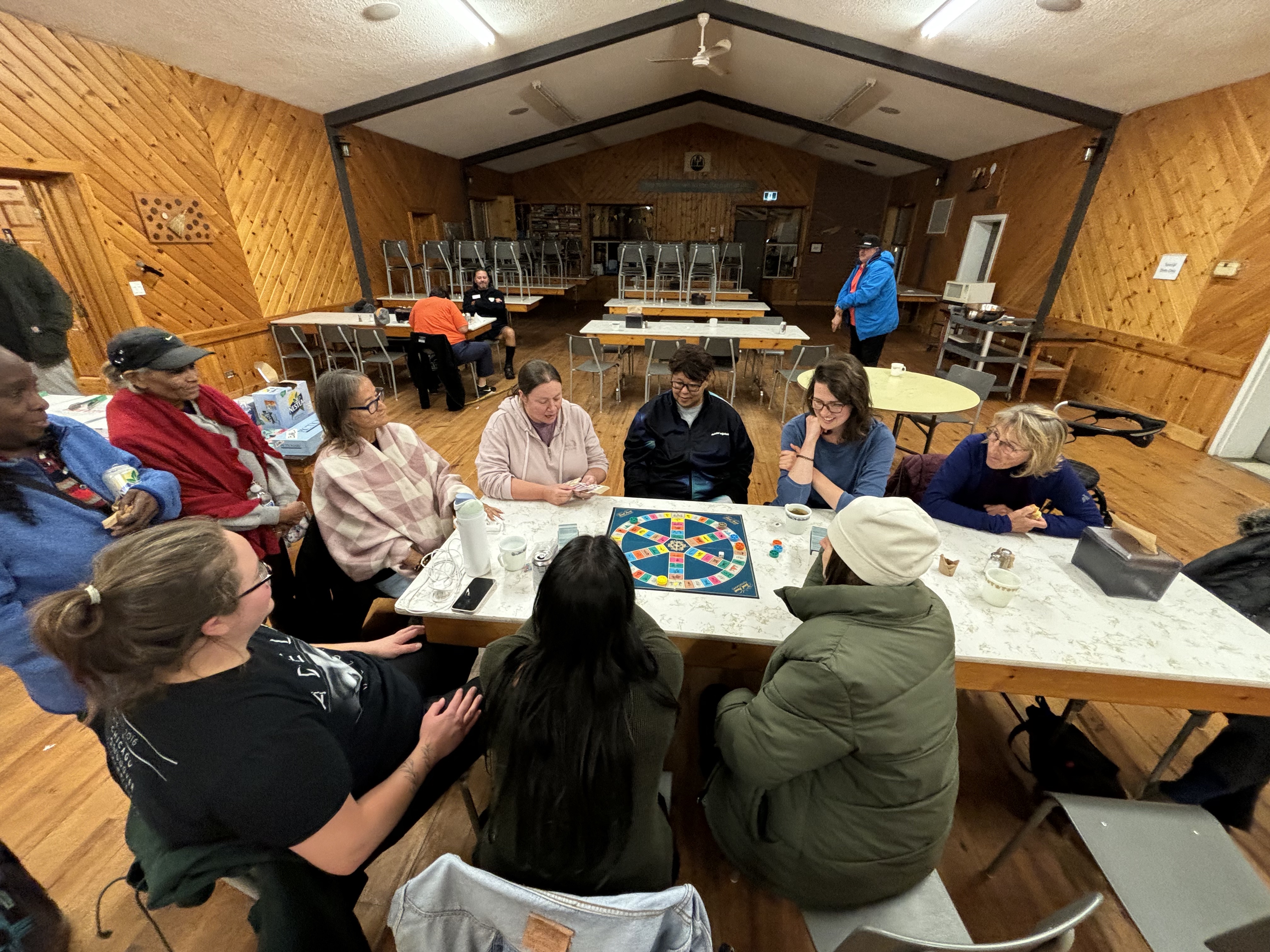
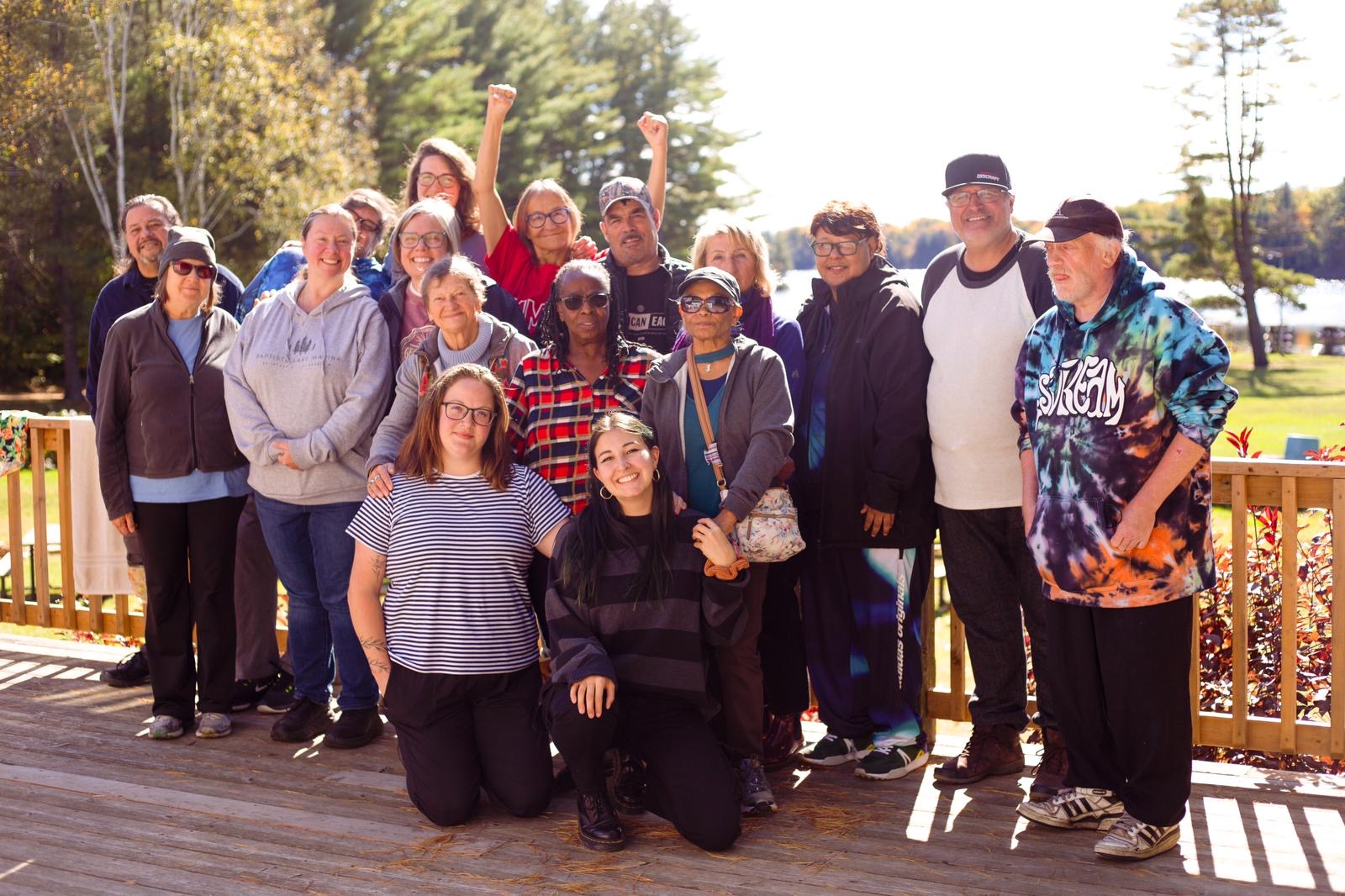
Over the course of the next couple of days, we went on walks, sat on the dock, put together puzzles, played games, ate lots of food, slept, gathered around campfires, took out boats, and talked. Joanna and I jumped in, and very quickly out, of the lake. Meagan’s kindergarten aged daughter Charlotte drew pictures of people as gifts. Some gathered for Morning Prayer. On the last day we sang, shared gratitude, and took communion together. By the end of it people felt closer, some commenting on how they are now more a part of the community. 

The retreat helped me to grieve and to hope. I felt able to name that I was missing people. I also got to be present with an amazing group of people who did sign up and get on that bus. Maybe that’s part of what brought about my dream. Life continuing does not mean forgetting. And remembering does not mean excluding. The table is wide and there is always room for more.

The Power of Collective Memory: Honoring the Past to Shape Our Present

I went home to clean up and eat after spending two and a half days at my mother Elaine’s bedside as she journeyed closer to death. My family encouraged me to take a break. I remember eating a small plate of pasta with a single enormous meatball that a friend had made and delivered as a gesture of support. Shortly after washing my face, I received a call that my mom was suddenly moments away from her last breath. I couldn’t bear the thought of not being with her and began to run to the hospital, praying, “Please, let me make it. Please, let me make it.” 

It was a holiday Monday, and customary fireworks erupted in the sky ahead of me, feeling as if they were meant for my mom. Breathless, I nearly collapsed as I entered the room, rejoining the circle and tenderly taking my mom’s hand. Within minutes, she passed away.

To ensure I wouldn’t forget, I wrote down my experience of that final weekend with her while planning her funeral. Inspired by those in Scripture who laid down stones to mark significant places and divine experiences, I committed my memories to paper. The more I wrote, the more recollections surfaced. Remembering became an act of honoring both my mom’s life and her sacred end.

For me, remembering isn’t about sifting out the good from the bad; the difficult moments deserve acknowledgment too. To place someone on a pedestal denies the complexity of life. My mom’s life was a blend of sorrow and joy, loss and abundance, and to ignore those contrasts feels disingenuous. It’s not just important that we remember; how we remember matters just as much.

Consider how often history is written by those who believe they’ve won it—the “victors.” This perspective privileges the powerful while marginalizing or even erasing those without a voice. The challenge for us all is that what we remember is subject to interpretation. Memory does not grant us access to all the raw facts of the past; even the facts we recall are shaped by our interpretations. What we remember holds significance for our identities, whether positive or negative.

This is why the collective dimension of memory is essential in a theology of remembering. When we remember together, we connect to past events in meaningful ways. In the case of my mother, I needed to gather with others who grieved her too. Together, we remembered and learned things about Elaine that we might not have otherwise known. Participating in rituals like funerals or communion links communities to past events while fostering meaningful narratives. I believe that remembering the past helps us understand how we relate and engage in the present. My mom’s life taught me about patience and grace—lessons that continue to influence me, and that I never want to forget.

Post Script: I was recently invited to reflect on a theology of remembering and share about it at a gathering called the Dead Heretics Society. I was moved by all of the presentations and the conversation that ensued. With thanks to Carl Amouzou and his team for creating space for, as they describe it, more nuanced, marginal, or grassroots
perspectives on theology, culture, and philosophy. 

Cathartic Experience: Processing Grief and Fatigue

It always happens around Day 3 of my vacation. As I sit in solitude and my body begins to rest, the many things that are hard and contribute to my fatigue rise to the surface. This year in particular has been marked by a large amount of loss in a short period of time. While I am always trying to attend to my grief, 2024 has not made it easy to keep up. Even before the death of one person registered in my heart, another person was just as suddenly gone. Reflecting on this while sitting on a dock and staring out at the water, I began to sense the impending wave of emotion. I’ve learned to not resist.

What ensues is a mix of things. I ugly cry. I pray- sometimes wordlessly, and sometimes with so many words that I can’t help but trip over them. I try to breathe through the pain in a mindful way. At some point I can’t keep my eyes open and fall asleep in the sun. This time that nap was accompanied by a dream that one person had faked their death and I happened to spot them in a crowd. Side note: yes, I’ve told my counsellor about this. Overall, the experience lasts more than a day and is both painful and cathartic. 

I say cathartic because I know the stress, the grief and the fatigue cannot simply take up residence in my body. For me, letting these things hibernate means a stiff neck, chest and shoulders. A previous rotator cuff injury makes a re-appearance. My lifelong effort to calm an anxious gut becomes difficult again. Though my demeanor is generally calm (a trait I inherited from my Mom and is not fake), it can sometimes fool me into thinking I am more okay than is true. And so, taking the time to really notice what I am feeling, shaking it awake and giving expression to it has become necessary for my overall health and longevity in my work. 

A mess of things happened on that dock at the beginning of August. But, as we often talk about at The Dale, messy is also beautiful. The sun remained in its place and shone down on me, the birds accompanied my prayers, and the life under the water continued its work. I felt comforted by the truth that the world keeps turning and aware of God’s presence. The smell of sunscreen and someone else’s BBQ evoked memories that made me grin. The releasing of emotion finally gave way to a good kind of tired. And then by the second nightfall I fell into a dreamless and deep slumber.

I am now in the latter part of my holidays. I am slowly feeling more rested. I wish I could write that my yearly Day 3+ experience is some kind of magic bullet that makes everything better. Grief, as I’ve learned, is not something that you “get over” but that you move through. Dismissing it, though it might feel easier in the moment, does not make it go away. I find that when I reflect on the person who is gone and allow myself to really feel the loss, there is mysterious space created for healing. Remembrance is an important act of love. And I’m glad to have been reminded of it. 

Embracing Hurt and Healing: A Soul-Searching Weekend

I recently had an overwhelming week at The Dale. Without getting into details, let’s just say I felt emotionally and spiritually spent. While it is not uncommon for my life to feel like a lot, I don’t often feel so downtrodden. Without even the words to describe what was going on in me, the discomfort of it all ballooned.

Before all of this happened, Cate asked if I would be willing to drive her, Matthew, and Declan up to the camp that they all attended and worked at for many summers. Though the three of them are not working there anymore (it’s a new stage of life!), they wanted to visit. I said yes. By the time our trip rolled around, I was especially tender. I didn’t know what I needed but was worried being surrounded by a lot of people at camp was not it. However, the trip went ahead as planned.

Whenever I drive north on Highway 400, I get pangs of nostalgia. My mom grew up in Sudbury, and my grandparent’s cottage was in Killarney. The red rock of the Canadian Shield, the swaying birch trees, and the water all bring me a degree of peace. A lot of the landmarks along the drive have changed, but not all of them- enough remain that bring up old memories.

When we arrived at the camp, I greeted people, found the cabin I would share with Cate, and explained that I would be going into Parry Sound for much of the day. As I drove along the gravel road, surrounded by forest, the lump that had been lodged in my heart for the majority of the week began to dislodge. I still didn’t have any words, just groans and tears. It was all its own kind of prayer.

I eventually got to the beach in town where I laid out a towel, sat and watched the waves, the sailboats, and the handful of children building sandcastles. One little person got into a game of tag with a seagull. I soaked in the sun, read a book in fits and starts, and eventually jumped in the water. As I floated around and stared at the clouds, I felt reminded of how the world keeps moving and growing, even when my own little piece of the world feels stalled and upside-down. I cried some more.

Over the course of the day I ate some food, watched pontoon planes land on the bay, and slowly walked around the docks. Eventually I decided it was time to head back to camp. The groans and tears that accompanied my drive into town, joined me again on that same gravel road. It felt both exhausting and cathartic. I wiped my face and rejoined the group in the late afternoon by settling into a couch in the lodge. From that vantage point I saw Cate working away as though she was still staff. I took a moment to admire the ease with which she was interacting with everyone. I listened to Declan play the keyboard and sing, something I loved doing when he was my housemate for a year. Matthew came to check on me with his characteristic concern and smile. I began to feel more grounded.

We only stayed at camp overnight and into the next day. Cate and I reunited with Dion and shared a good meal. As I reflect now, I think I needed the nostalgia of the highway, the connection to the landscape, the company of Cate and her crew, the alone time, and dinner with my family to find the words to describe my state.

It turns out I had experienced a deep level of hurt during my overwhelming week, and I wasn’t sure that I was allowed to feel it. Over the years, I have gathered up a lot of tools to manage the kind of work that I do. I have a high tolerance for and can help de-escalate heated situations. I feel equipped to practice active listening, which includes hearing about many traumatic things. I know God gives me strength that is not my own. And, I can only hold so much. In a sense, denying my hurt diminished my humanity.

As I write this, the fog I have been in is lifting and the hurt is dissipating. I am realizing that just as I need to ride the wave of grief when it hits, I need to address pain. When I do, the noise is calmed enough that I can again hear God’s voice, reminding me of where I have been called and that I am loved. Without even realizing it, I started to hear those truths whispered as I cried amongst the trees.

When Easter and Death Collide

This year, Easter coincided with multiple deaths in The Dale community. The result for me has been a real wrestling with resurrection. In the Christian faith, we celebrate that Jesus died and then came back to life. There is promise in this that we too will ultimately overcome death, but for now we still have to stare it in the face. Three friends, in the span of mere weeks, are gone from here arguably too soon. Resurrection seems very far off. 

Death is an experience, as the band Mumford and Sons sings, that is so “full”. There is no mistaking that the person is gone, and yet it doesn’t make any sense. Clinging to a future hope while managing the reality of now can be hard work. It has me exploring the word “resurrection”, and delving deep into the story of Jesus, wondering again about what it all means. 

The origin of the word resurrection means “to stand” or “to rise up”. Some dictionaries define it as: “the act of bringing something that had disappeared or ended back into use or existence”. This actually brings to mind the ways that I have seen forms of resurrection. Like when a tree buds in the spring, or a broken relationship is restored, or sobriety is found, or a family is reunited, or health returns after an illness. 

In Scripture, all of the post-resurrection appearances of Jesus center on the physical. Jesus didn’t speak with a loud voice from the sky, He instead showed up with hands, feet, and scars. He embraced Mary, made footprints on the road with people, chewed on a piece of fish, and made a campfire on the beach to cook breakfast for his friends. It was in the presence of skin and bones that the disciples came to faith. Jesus turned the trauma of his death into communion with His people.

I love that Jesus used ordinary and concrete things to ground the divine. It makes me think we can do the same: that there is a sacredness in gathering, in breaking bread together, in doing dishes, in walking and leaving footprints, in sharing our scars. When I take a step back at a Dale drop-in and listen to the hum of conversation, notice the cups of coffee being shared, watch two people forgive each other, see the joy on someone’s face when they receive a compliment, I do believe I am experiencing communion while catching a glimpse of resurrection. 

In the middle of this season of loss, we experienced a person being brought back to life during a gathering of The Dale. It was at our Bible Study, while we were talking about resurrection that this person died, was revived and about a half hour later walked away. It was astonishing. It made me appreciate even more how shocking it would have been to see Jesus a full three days after death. I can’t imagine what it would be like to have one of my recently deceased friends show up, even if it is exactly what I long to have happen. 

The profound mystery that is the resurrection is one I do not expect to entirely understand on this side of things. In the meantime, my prayers for healing here and now will never stop. I desire for all that has been taken, broken, mistreated, wronged, and forgotten to be restored. The resurrection of Jesus is the promise I hang on to, sometimes by the skin of my teeth, when healing does not look like what I might expect or hope in the present.

Griefs, Observed

The sun was shining on my most recent Sabbath, which for me is always a Friday. I had a quiet morning, during which I made myself a coffee and decided to sit in the backyard. There is a fountain next door, so I closed my eyes and listened to the sound of running water. A bee leisurely buzzed around me, a squirrel scampered by, and what at least sounded like an owl offered a “hoot”. I had brought out a book, which my hand rested on. As I took a sip of my drink and went to read, I was struck by a vivid memory of my mom sitting on the dock in Killarney, the place where her parents built a cottage though we always called it the “camp”. She loved to sit and read for hours, listening to the waves. 

I began to cry.

My mom moved from the dock to the chair beside me. I could imagine her enjoying the same sounds as she sat with a coffee (always strong and black) and a selection of short stories. I looked up and suddenly pictured my dad walking toward the backyard, likely having gone to the corner store for the one thing I was missing for our meal. He liked to do that. I realize how I often think of my mom as sitting and my dad as walking. I make a mental note of that to reflect on another time.

My tears gathered momentum at this point. I was now surfing the wave of grief. 

I was then joined by Rick Tobias. Rick spent a lot of time in the backyard, especially over the last few years. He would make the slow walk down the driveway with his cane, a cooler of ice and coke zero, a bottle of scotch, and a couple of his prized glasses from Iona. In fact, it was at this time last year that we had our last little gathering before Rick’s death on May 18th. But on this sunny day, Rick was back. I could almost hear his greeting and the sigh as he settled into a chair. 

I find that once I’m fully engaged in a moment like this, it is easy to begin picturing even more of the people I now miss. While that might sound overwhelming (and yes, it can be), on this particular day it was not. Everyone looked happy and relaxed, dare I say, whole. And I got to remain in my seat and welcome them all to the party.

I looked up at the blue sky with my tear stained face and began to take some slow, deep breaths. I prayed out loud. I finally finished my coffee and noticed that my book had fallen from my lap to the grass. The flood of memories stilled itself. I agree with CS Lewis who said, “Grief is like a long valley, a winding valley where any bend may reveal a totally new landscape.” While I might wish for grief to be a linear journey, it is not. It ebbs and flows, and sometimes includes visitors on a sunny Sabbath day. 

Steve J

I don’t know when it changed, but at some point, it became a bit of a game. For a long time, Steve could not remember my name. We would see each other regularly, him in one of his usual spots, almost always sitting or leaning directly on the sidewalk. He would greet Joanna, Meagan and Olivia, and then look at me and say, “what’s your name again?” For a while I would get him to try and guess. A few times he called me Erinn. And then began the running joke. Steve would look at me with a glint in his eye and ask my name. I would say, “you know it!” and then he would start laughing. I loved to hear him giggle.

I’m not going to share the kinds of things that Steve experienced in his life, but I know he would be okay with me saying that he had more than a hard go. I have a strong memory of sitting with him and Joanna on a Queen Street West stoop one afternoon. He was generous with the way he shared. We talked about the importance of all people being treated as people, and how that’s what he wanted.

Steve died this week. I can’t imagine the corner of Queen and Dowling without him. I know that his friends, many of whom were constant companions, will be feeling his absence deeply. When I close my eyes, I can picture Steve on a happy day: he is lit up because a group of his people have gathered with drums and food. Some people are dancing in Jingle dresses. For a moment I can see young Steve, revelling in the feast.

Rest to you Steve. Chi Miigwetch.

The Heavy Fog

I was headed east when I noticed what at first appeared to be smoke from a fire. It wasn’t until I got closer that I realized it was actually fog rolling in from the lake. Soon, no matter what direction I looked was a haze that made the skyline of Toronto eerily absent. The fog stayed for days. 

It was during this time that an unmistakable intense turn happened in the lives of many people I love. In general terms, there was a collective “we’re hitting the end of ourselves”. As I sat on the ground with someone in distress, I found myself with an uncharacteristic empty feeling in my gut. Neither of us could imagine a way forward. With tears stinging my eyes but not even falling, I joined in the lament for broken systems, injustice, trauma, lack of housing, misdiagnosis and overmedicating, estrangements, and the all too constant accumulation of grief. 

Just a week prior to this was Story Night, an event that I have yet to really process. When asked about it, I have consistently said that as a group we sat in the risky and messy middle of a lot of things, rare in this increasingly polarized world. At the beginning of the night I suggested that we didn’t need to rush through the lament in order to get to hope. We get to (need to) sit in the disorientation of pain, or as Walter Brueggemann describes, that place where we have, “sunk into the pit”. 

There are times when I sit in that pit and the weather does not match the mood, the sunshine taunting me to get up and get on with it. In a strange way, I think the dense fog that just wouldn’t lift was illustrating for me the necessity of being present to the grief. At times it was uncomfortable and very hard to see. All the familiar landmarks became unrecognizable. I had more than a few white-knuckled drives. It even felt claustrophobic. 

You can see the city again. The mist has retreated. Are all the lament-worthy things gone too? Unfortunately, no. I did however take notice of a few things. One person had a conversation with someone who had been ignoring them for years. Another has avoided eviction. Yet another had a bit of respite out of the city. I am also hearing from people who attended Story Night and were deeply impacted. It was an example of, as more than one person put it, mutual care.  Living into the tension of lament and hope is hard work. I am more convinced than ever that whether we are sitting on the ground with someone or gathered in a room with a lot of people, to navigate both the fog and the sun we need each other.

Turn Toward the Light

I am sitting in my living room. It is quiet, except for the occasional creaking sound that seems to be brought on by the wind. My body is arguably idle, my brain is not. Today is the funeral for a friend named Ben, a person nearly the same age as me. As is often the case with me and death, it brings up memories of those already gone and causes me to consider my own mortality.

There are so many people that I miss. I can still picture my mother laying on the couch where I now sit, or my father emphatically sharing a story in the kitchen. I have a strong memory of my grandmother (who I called “Gran”) picking very-young-me up to go to Sudbury for a visit with her and Grandpa Bill. We went blueberry picking and then I washed off the purple stains on my hands by going for a dip in Lake Ramsay. Chocolate turtles and clementines always remind me of my paternal grandfather, because he gave us both every Christmas.

Recently, eager to show someone an old picture on my phone, I found myself scrolling by so many shots of Dale community members who are no longer alive. Chevy, Iron Mike, Mark, Clive, Ernesto, Sanchez, to name but a few. I remember Grumpy sitting in the bus shelter and greeting me with, “AHHHH. Did you know I’ve SEEN THE LIGHT? One of these days I’m going to teach you how to preach.” or Little Stevie calling out to me, “there’s my Erinn”. Sometimes my eyes play tricks on me and I think Will is coming around the corner by the library to have a chat on the sidewalk.

During a recent therapy session, my counsellor asked me to talk about some of the people I acutely grieve. I was invited to share about what a person taught me, or what I most remember about them, or how they made me feel. I was also safe to share about what drove me crazy, or even a difficult conversation we once had. Honouring a person doesn’t require remembering only the good. In fact, I think it is honouring to acknowledge the whole person, challenges and all.

I don’t know when my own time will come, or what that experience will be like. Despite being in proximity to death a lot, the whole thing remains largely a mystery. My faith causes me to cling to the belief that it is not the end- that there is more, and it will be beyond good. I like to picture my mom being freed of her wheelchair, or my Gran eating blueberries warmed in the sun, or any one of my friends who lived outside having the most comfortable bed to sleep on.

I have been asked to read two blessings at the funeral today for Ben. Both have a lot to do with light and how we bear it, even in the unbearable things. This part of one of the blessings leaps out at me: “I cannot tell you how the light comes, but that it does. That it will. That it works its way into the deepest dark that enfolds you, though it may seem long ages in coming or arrive in a shape you did not foresee.” (Jan Richardson)

I am about to drink another coffee, made with the machine that Ben first showed me how to use on a New Year’s Eve spent together with our families and friends. The wind continues to blow. I am still sitting and glancing out the window, I notice the sun trying to peek out. The light makes me want to both cry and smile. Whatever I feel, I cannot help but turn my face toward it.